-
Shop
- Advanced Technologies
- AI Career Advantage Collection
- AI Skills
- AI Skills for Creators & Freelancers
- AI Client Management
- AI Ethics
- AI Mindset
- AI Tools & Prompts
- AI Writing & Content Creation
- Audio, Voice & Music
- Design & Visual Creation
- Email, Messaging & Communication
- Freelancing & Business
- Marketing, Ads & Conversion
- Productivity, Workflow & Automation
- SEO & Search Optimization
- Social Media Content & Growth
- Strategy, Planning & Analytics
- Video Creation & Editing
- AI Skills Mastery 2026 Collection
- Bathroom
- Calvin Klein
- Car Accessories
- Confidence
- Dating & Social Skills
- Digital Resources
- Beauty
- Budgeting & Saving
- Car Buying & Ownership
- Cozy Feast Collection
- Electronics & Technology
- Emotional Intelligence
- Entrepreneurship & Business Growth
- Financial Education
- Financial Independence
- Financial Mindset & Psychology
- Goal Setting
- Hobbies
- Home Styling & Organization
- Leadership
- Mindfulness
- Mindset
- Motivation
- Online Business
- Parenting & Child Development
- Personal Style & Fashion
- Pet Lifestyle & Wellness
- Positive Thinking
- Productivity
- Self Confidence
- Sleep Improvement
- Smart Life with AI
- Stress Management & Relaxation
- Travel Planning
- Wellness
- Yoga & Fitness
- Yoga & Mind-Body Practices
- Education & Learning
- Family & Parenting
- Furniture
- Health & Wellness
- Home Electronics
- Kitchen
- Lighting
- Luxury Brands Collection
- Nike
- Online Business for Beginners
- Parenting Guides Collection
- Patio, Lawn & Garden
- Personal Growth
- Pet Care
- Pet Supplies
- Smart Amazon Shopping
- Smart Home Living Guides
- TikTok Growth & Monetization Mastery
- Travel
- Travel & Adventure
- Wealth
- Wealth Building
- Popular
- Best deals


Product Description
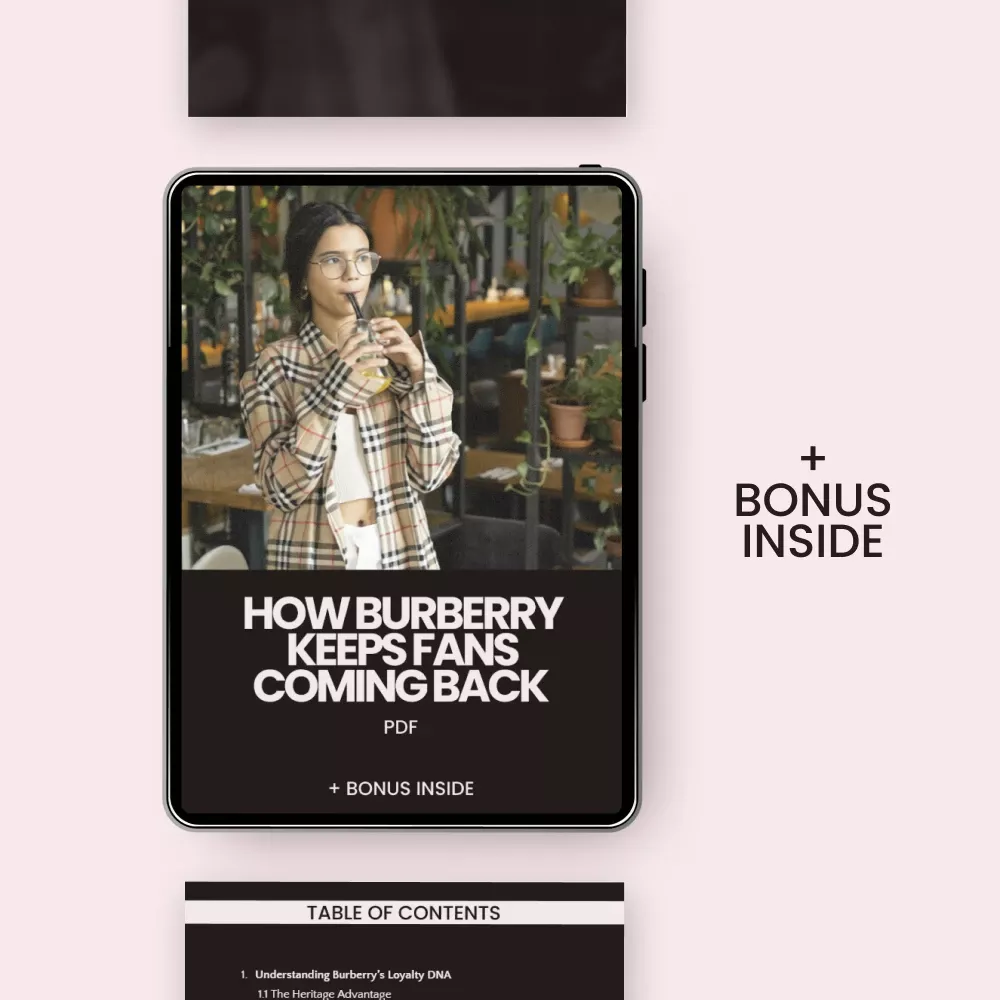
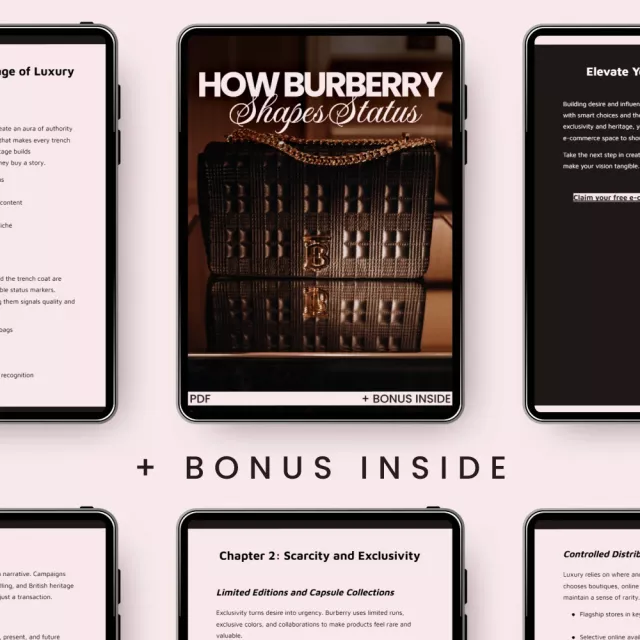
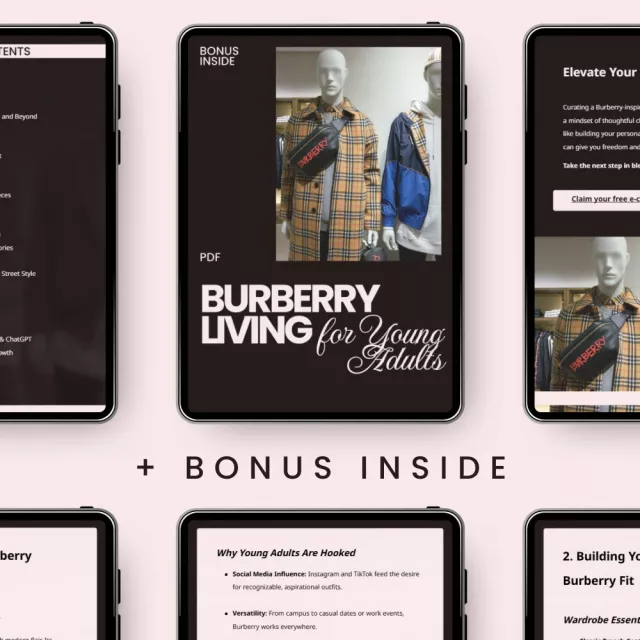
Unlock Burberry’s Secrets to Customer Loyalty with This Exclusive Guide
Ever wondered how Burberry manages to keep its fans coming back for more? The answer lies in a blend of heritage, exclusivity, and unforgettable customer experiences. In this comprehensive digital guide, you’ll discover the key strategies Burberry uses to build customer loyalty that lasts. Whether you’re a marketer, business owner, or just a fan of the luxury brand, this guide offers invaluable insights that will help you understand the power of emotional connections and customer engagement in creating a loyal following. It’s time to learn the art of loyalty from the experts.
This guide covers everything you need to know about how Burberry builds loyalty, including:
- Understanding Burberry’s Loyalty DNA – Dive into the rich heritage and emotional connections that form the core of their customer loyalty.
- Crafting Experiences That Stick – Learn how Burberry seamlessly blends digital and physical experiences for maximum customer impact.
- Learning From Successes and Slip-Ups – Analyze real case studies, from social media engagement wins to the mistakes brands often make that erode trust.
- AI Tools to Elevate Loyalty Strategy – Discover how AI tools like ChatGPT and Midjourney can take your customer experience to the next level.
Why This Guide Stands Out
This isn’t just another business book. This guide is a practical, actionable resource for anyone looking to build a loyal customer base. Unlike other digital resources, this guide dives deep into the how Burberry builds loyalty by examining their strategies in detail. We break down each step of the process, making it easy for you to apply these principles to your own business or personal brand.
Who is this for? This guide is perfect for marketers, entrepreneurs, business owners, or anyone interested in learning how to build lasting customer relationships and drive brand loyalty. Whether you work in fashion, retail, or any other industry, the lessons within these pages are universally applicable.
Practical Benefits of This Guide
- Gain insider knowledge into Burberry’s loyalty-building strategies and apply them to your business.
- Learn how to craft unforgettable experiences that keep customers coming back for more.
- Understand the role of exclusivity and emotional connections in creating brand loyalty.
- Access AI tools that can elevate your customer experience and engagement strategy.
Don’t miss out on the chance to learn from one of the world’s most successful luxury brands. Download this guide now to start building loyalty and creating unforgettable customer experiences today!
Shipping & Delivery
SHIPPING
We are proud to offer international shipping services that currently operate in over 200 countries and islands world wide. Nothing means more to us than bringing our customers great value and service. We will continue to grow to meet the needs of all our customers, delivering a service beyond all expectation anywhere in the world.
Do you ship worldwide?
Yes. We provide free shipping to over 200 countries around the world. However, there are some locations we are unable to ship to. If you happen to be located in one of those countries we will contact you.
What about customs?
We are not responsible for any custom fees once the items have been shipped. By purchasing our products, you consent that one or more packages may be shipped to you and may get custom fees when they arrive to your country.
How long does shipping take?
Shipping time varies by location. These are our estimates:| Location | *Estimated Shipping Time |
|---|---|
| United States | 5-20 Business days |
| Canada, Europe | 5-20 Business days |
| Australia, New Zealand | 5-20 Business days |
| Central & South America | 5-25 Business days |
| Asia | 5-20 Business days |
| Africa | 5-25 Business days |
Do you provide tracking information?
Yes, you will receive an email once your order ships that contains your tracking information. If you haven’t received tracking info within 5 days, please contact us.
My tracking says “no information available at the moment”.
For some shipping companies, it takes 2-5 business days for the tracking information to update on the system. If your order was placed more than 5 business days ago and there is still no information on your tracking number, please contact us.
Will my items be sent in one package?
For logistical reasons, items in the same purchase will sometimes be sent in separate packages, even if you've specified combined shipping.
If you have any other questions, please contact us and we will do our best to help you out.
RETURNS
Order cancellation
All orders can be cancelled until they are shipped. If your order has been paid and you need to make a change or cancel an order, you must contact us within 12 hours. Once the packaging and shipping process has started, it can no longer be cancelled.
Refunds
Your satisfaction is our #1 priority. Therefore, you can request a refund or reshipment for ordered products if:
- If you did not receive the product within the guaranteed time (45 days not including 1-3 day processing) you can request a refund or a reshipment.
- If you received the wrong item you can request a refund or a reshipment.
- If you do not want the product you’ve received you may request a refund but you must return the item at your expense and the item must be unused.
We do not issue the refund if:
- Your order did not arrive due to factors within your control (i.e. providing the wrong shipping address)
- Your order did not arrive due to exceptional circumstances outside the control of megaselectionsnook.shop (i.e. not cleared by customs, delayed by a natural disaster).
- Other exceptional circumstances outside the control of megaselectionsnook.shop.
*You can submit refund requests within 15 days after the guaranteed period for delivery (45 days) has expired. You can do it by sending a message on Contact Us page
If you are approved for a refund, then your refund will be processed, and a credit will automatically be applied to your credit card or original method of payment, within 14 days.
Exchanges
If for any reason you would like to exchange your product, perhaps for a different size in clothing, you must contact us first and we will guide you through the steps.
Please do not send your purchase back to us unless we authorise you to do so.
Refunds & Returns
Order cancellation
All orders can be cancelled until they are shipped. If your order has been paid and you need to make a change or cancel an order, you must contact us within 12 hours. Once the packaging and shipping process has started, it can no longer be cancelled.
Refunds
Your satisfaction is our #1 priority. Therefore, you can request a refund or reshipment for ordered products if:
- If you did not receive the product within the guaranteed time( 45 days not including 2-5 day processing) you can request a refund or a reshipment.
- If you received the wrong item you can request a refund or a reshipment.
- If you do not want the product you’ve received you may request a refund but you must return the item at your expense and the item must be unused.
We do not issue the refund if:
- Your order did not arrive due to factors within your control (i.e. providing the wrong shipping address)
- Your order did not arrive due to exceptional circumstances outside the control of megaselectionsnook.shop (i.e. not cleared by customs, delayed by a natural disaster).
- Other exceptional circumstances outside the control of https://marvellio.com
*You can submit refund requests within 15 days after the guaranteed period for delivery (45 days) has expired. You can do it by sending a message on Contact Us page
If you are approved for a refund, then your refund will be processed, and a credit will automatically be applied to your credit card or original method of payment, within 14 days.
Exchanges
If for any reason you would like to exchange your product, perhaps for a different size in clothing. You must contact us first and we will guide you through the steps.
Please do not send your purchase back to us unless we authorise you to do so.
Customer Reviews
See why hundreds love this product and trust us
Based on 48 reviews
Write a Review
We Think You’ll Love
Top picks just for you













The exclusivity table alone gave me a framework I've been missing for months.
Finally a loyalty guide that treats fashion customers like people, not wallets 🔥
I run a small accessories brand and have been struggling to keep first-time buyers coming back. The emotional connections section reframed everything for me — I stopped thinking about discounts and started thinking about how my packaging makes people feel. Added handwritten notes to every order last month and my repeat purchase rate jumped noticeably. The AR Snapchat case study also gave me the push to try interactive content on my own Instagram. It's not Burberry-scale obviously, but the principle of playful engagement translating to loyalty absolutely holds at any size.
Short read, dense insights — exactly the ratio I want.
The pitfall/fix tables are brutally honest. Seeing common mistakes laid out that clearly made me realize I was guilty of at least two of them in my own brand strategy.
Solid breakdown of omnichannel strategy using a brand everyone recognizes.
The section on scarcity going wrong is something every small brand needs to read before launching a limited drop. I've seen so many indie labels fumble this exact thing — products selling out in seconds with no waitlist, leaving angry customers behind. The fix is so simple and I wish I'd seen it sooner.
Good overview of how heritage drives trust. The AI tools section felt underdeveloped compared to the loyalty strategy content though.
Printed the trust-erosion table and taped it next to my desk.
❤️🧥🔥⭐
The point about customers remembering feelings over products hit different.
I manage loyalty programs for a mid-tier retailer and picked this up to see what luxury gets right that we don't. The VIP pre-order strategy was the biggest takeaway — we'd never considered giving our best customers early access as a retention tool. Within two weeks of testing it on a new collection, our email open rates from top-tier members doubled. The guide also made me rethink how we handle negative feedback on social. We'd been ignoring comments that weren't direct complaints, and that silence was apparently reading as indifference. Now we respond to everything. The omnichannel section validated some changes we'd already made but gave me language to pitch the next round of investments to leadership.
Not just about Burberry — it's a loyalty playbook disguised as a brand study.
The collaboration strategy section is razor sharp. Capsule drops that feel collectible, limited enough to create urgency but creative enough to inspire sharing — that formula clicked for me instantly 💡
Straightforward and well-structured from start to finish.
Decent content for beginners but felt a bit thin on data and case studies. One Snapchat example isn't enough to support the claims being made about engagement strategy.
The heritage advantage section explains why legacy brands have an unfair head start — and how to build your own version of that from scratch. Took me from envious to strategic in ten minutes.
Every DTC founder should read the trust erosion section before their next launch.
Clean, actionable, and avoids the usual fluff you find in free guides.
The emotional loyalty framework is great. Would have liked to see more on how smaller brands can replicate these strategies without Burberry's budget.
Read it, applied the touchpoint audit idea, found three gaps in my funnel within an hour.
👏✨👌
The personalization vs. generic marketing comparison was a gut punch — I've been sending the same newsletter to 4,000 people.
I work in fashion PR and shared this with my entire team. The biggest win was reframing how we pitch events to clients. Before reading this, we treated VIP events as nice extras. After the section on how physical experiences cement loyalty, we started positioning them as retention infrastructure. The Vivienne Westwood collab example was the perfect reference point for a proposal we'd been struggling to sell internally. My director approved a private preview event for our biggest client's fall launch — first time they'd agreed to something like that. The guide also helped me articulate why ignoring negative social comments is actively damaging rather than just lazy. We overhauled our response protocol that same week.
More brands need to hear the part about neglecting feedback loops 👀
Useful loyalty framework overall. A few sections felt repetitive — the heritage point gets made three different ways without adding new depth each time.
Quick read that punches above its weight.
The omnichannel section connecting AR try-ons, QR codes, and social campaigns into one seamless journey made me realize how disconnected my own brand's touchpoints are. Spent the following weekend mapping every customer interaction from discovery to repeat purchase and found massive gaps between online and in-store experiences.
Capsule collections as loyalty tools — never thought of drops that way before.
The guide is pleasant to read and has some solid points about emotional branding. However, I felt it stayed too high-level without offering enough specifics on execution, especially around measuring loyalty outcomes.
Applied the waitlist idea from the scarcity section to my last product drop — zero angry DMs this time 🙌
The next steps section at the end is surprisingly practical for a free PDF.
Taught me more about retention in twenty minutes than a marketing course I paid for.
Good strategic thinking, especially on exclusivity and emotional connections. The AI tools chapter needs more depth — listing Canva and Copy.ai without showing how to actually use them for loyalty campaigns feels incomplete.
The way this separates what drives urgency from what builds long-term attachment is really well done.
🔥🧣👏⭐⭐
My brand was stuck doing mass email blasts wondering why open rates were dying. The segmentation advice in the trust erosion table was the simplest fix I'd somehow never tried. Split my list into three tiers based on purchase history, personalized subject lines for each, and open rates climbed within the first send. Now building a VIP early-access flow inspired by the trench coat preview example. The guide also convinced me to stop treating social comments as optional — we hired a part-time community manager the following week.
Straightforward and honest about what even luxury brands get wrong.
Solid intro to loyalty strategy through a fashion lens. Some sections felt like they could go deeper, particularly around how to build emotional connections without a 170-year heritage to lean on.
The AR Snapchat campaign breakdown was the most concrete part — wish there were more examples at that level of detail.
Never realized how much damage unanswered social comments could do until this guide spelled it out.
A decent starting point for thinking about luxury loyalty. Reads more like an overview than a deep dive though — experienced marketers will want more substance on implementation and metrics.
Heritage as a trust-builder — such a simple concept but this guide made me see it with fresh eyes. Even newer brands can create a sense of origin story if they're intentional about it.
The invite-only experiences section changed how I think about my customer tiers.
This framing of scarcity plus creativity equaling community excitement is now my go-to pitch line 🎯
Useful and well-organized. Would give five stars if the AI section matched the quality of the loyalty strategy chapters — it felt rushed by comparison.
Shared with my business partner and we audited every customer touchpoint that same evening.
I co-own a streetwear label and we'd been treating loyalty as a points system — buy ten, get one free, that kind of thing. This guide completely reframed it. The emotional connections section made me realize we were optimizing for transactions when we should have been optimizing for feeling. We scrapped our old rewards program and replaced it with early access drops for repeat buyers and a private Instagram close-friends story with behind-the-scenes content. Engagement went through the roof within weeks. The common mistakes table was also painfully accurate — we'd been guilty of the generic marketing pitfall without even recognizing it. The fix of segmenting audiences and personalizing messages sounds obvious in retrospect but we genuinely hadn't done it. Our email unsubscribe rate has dropped since we started. Even the small tip about remembering past purchases led us to add a personal note referencing what each customer last bought. Three people screenshotted their notes and posted them.