-
Shop
- Advanced Technologies
- AI Career Advantage Collection
- AI Skills
- AI Skills for Creators & Freelancers
- AI Client Management
- AI Ethics
- AI Mindset
- AI Tools & Prompts
- AI Writing & Content Creation
- Audio, Voice & Music
- Design & Visual Creation
- Email, Messaging & Communication
- Freelancing & Business
- Marketing, Ads & Conversion
- Productivity, Workflow & Automation
- SEO & Search Optimization
- Social Media Content & Growth
- Strategy, Planning & Analytics
- Video Creation & Editing
- AI Skills Mastery 2026 Collection
- Bathroom
- Calvin Klein
- Car Accessories
- Confidence
- Dating & Social Skills
- Digital Resources
- Beauty
- Budgeting & Saving
- Car Buying & Ownership
- Cozy Feast Collection
- Electronics & Technology
- Emotional Intelligence
- Entrepreneurship & Business Growth
- Financial Education
- Financial Independence
- Financial Mindset & Psychology
- Goal Setting
- Hobbies
- Home Styling & Organization
- Leadership
- Mindfulness
- Mindset
- Motivation
- Online Business
- Parenting & Child Development
- Personal Style & Fashion
- Pet Lifestyle & Wellness
- Positive Thinking
- Productivity
- Self Confidence
- Sleep Improvement
- Smart Life with AI
- Stress Management & Relaxation
- Travel Planning
- Wellness
- Yoga & Fitness
- Yoga & Mind-Body Practices
- Education & Learning
- Family & Parenting
- Furniture
- Health & Wellness
- Home Electronics
- Kitchen
- Lighting
- Luxury Brands Collection
- Nike
- Online Business for Beginners
- Parenting Guides Collection
- Patio, Lawn & Garden
- Personal Growth
- Pet Care
- Pet Supplies
- Smart Amazon Shopping
- Smart Home Living Guides
- TikTok Growth & Monetization Mastery
- Travel
- Travel & Adventure
- Wealth
- Wealth Building
- Popular
- Best deals


Product Description
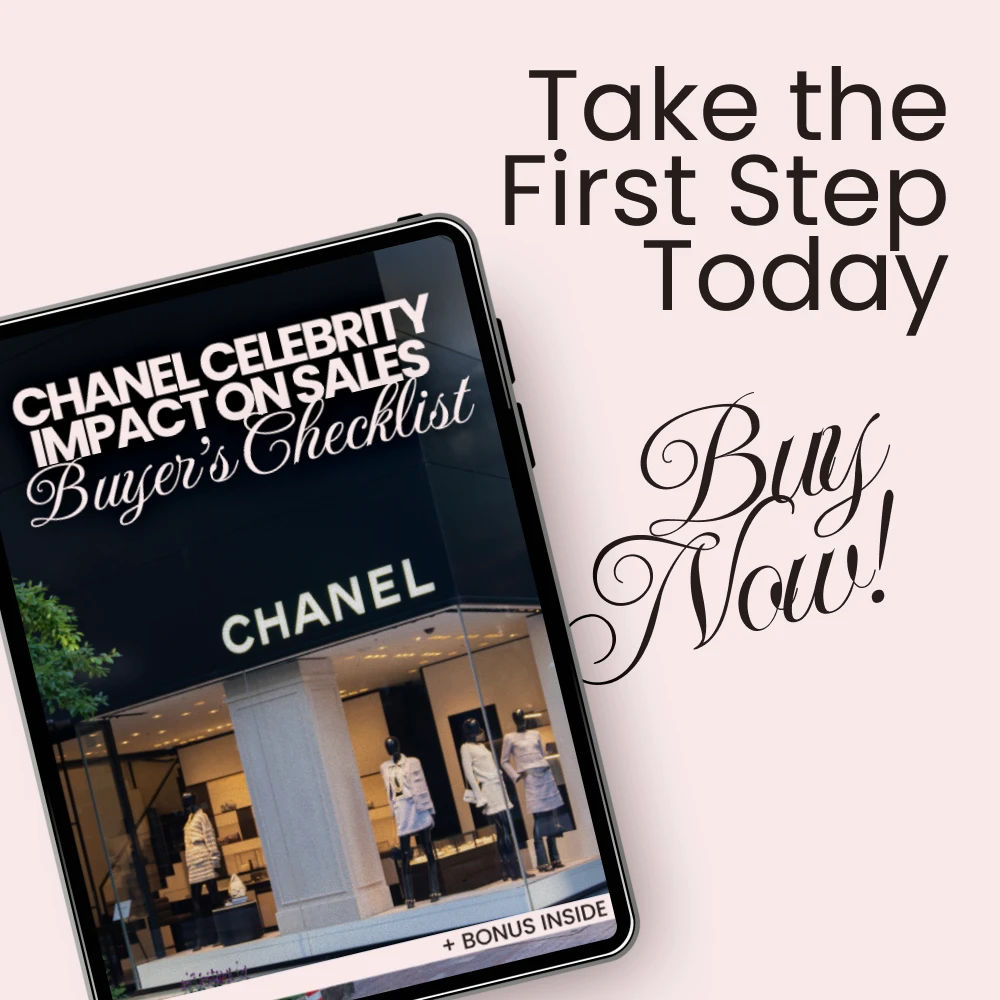
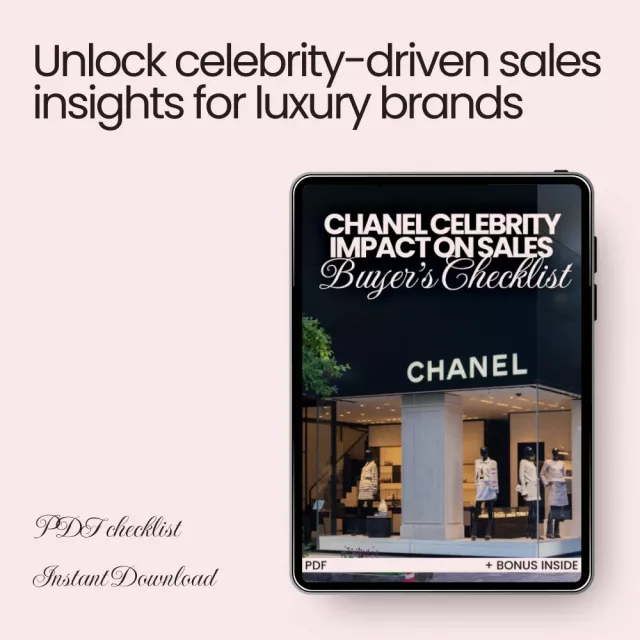
Unlock the Secrets of Celebrity Influence on Chanel’s Sales
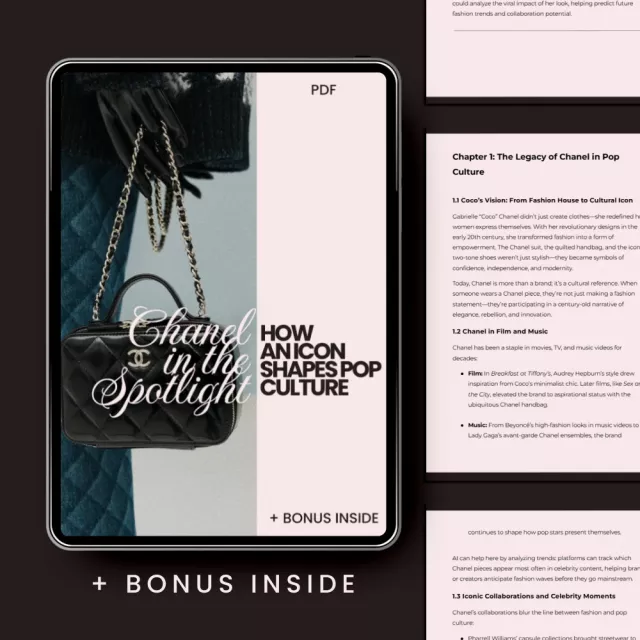
Discover the undeniable power of celebrity endorsements with the “Chanel Celebrity Impact on Sales” checklist. This digital download offers a comprehensive guide to understanding how high-profile personalities impact luxury fashion sales. Whether you’re in the fashion industry or running your own luxury brand, this checklist will show you how to track, analyze, and leverage celebrity influence to boost your sales strategy.
This essential checklist breaks down the process into actionable steps, helping you identify key celebrity endorsers, monitor social media buzz, and assess the direct correlation between celebrity exposure and sales. Perfect for marketers, brand managers, and entrepreneurs who want to harness the star power driving luxury fashion trends.
Key Features & Contents:
- Identify Key Celebrity Endorsers: Learn how to track which celebrities are currently influencing Chanel’s image through campaigns and social media.
- Monitor Social Media Buzz: Discover how to measure celebrity-driven engagement on platforms like Instagram, TikTok, and Twitter.
- Correlate Celebrity Exposure with Sales: Understand how visibility from celebrities leads to spikes in sales across Chanel’s product lines.
- Assess Celebrity-Driven Product Trends: See which collections and limited edition items gain popularity due to celebrity influence.
- Evaluate Marketing ROI: Calculate the return on investment from campaigns featuring celebrity endorsers.
- Plan Future Inventory Strategically: Use data-driven insights to forecast and prepare for demand influenced by celebrity promotions.
- Bonus: Launch Your Own E-commerce Business with our Free Store + $100 Voucher, leveraging celebrity-driven trends to fuel your sales.
Why You Need This Checklist
If you’re looking to stay ahead in the competitive world of luxury fashion, understanding the Chanel celebrity impact on sales is key. This checklist is perfect for professionals who want to boost their marketing efforts and ensure their inventory is aligned with celebrity trends. With this guide, you’ll gain a deeper understanding of how celebrity endorsements can drive sales, from bags and fragrances to limited-edition collections. By analyzing this influence, you’ll unlock powerful strategies for your own business or brand.
Start Leveraging Celebrity Influence Today
Ready to take your business to the next level? Download the “Chanel Celebrity Impact on Sales” checklist today and start applying celebrity-driven insights to grow your brand. Whether you’re in marketing, sales, or fashion design, this guide will give you the edge you need to thrive. Don’t miss out—click below to download your checklist and unlock the potential of celebrity power!
Shipping & Delivery
SHIPPING
We are proud to offer international shipping services that currently operate in over 200 countries and islands world wide. Nothing means more to us than bringing our customers great value and service. We will continue to grow to meet the needs of all our customers, delivering a service beyond all expectation anywhere in the world.
Do you ship worldwide?
Yes. We provide free shipping to over 200 countries around the world. However, there are some locations we are unable to ship to. If you happen to be located in one of those countries we will contact you.
What about customs?
We are not responsible for any custom fees once the items have been shipped. By purchasing our products, you consent that one or more packages may be shipped to you and may get custom fees when they arrive to your country.
How long does shipping take?
Shipping time varies by location. These are our estimates:| Location | *Estimated Shipping Time |
|---|---|
| United States | 5-20 Business days |
| Canada, Europe | 5-20 Business days |
| Australia, New Zealand | 5-20 Business days |
| Central & South America | 5-25 Business days |
| Asia | 5-20 Business days |
| Africa | 5-25 Business days |
Do you provide tracking information?
Yes, you will receive an email once your order ships that contains your tracking information. If you haven’t received tracking info within 5 days, please contact us.
My tracking says “no information available at the moment”.
For some shipping companies, it takes 2-5 business days for the tracking information to update on the system. If your order was placed more than 5 business days ago and there is still no information on your tracking number, please contact us.
Will my items be sent in one package?
For logistical reasons, items in the same purchase will sometimes be sent in separate packages, even if you've specified combined shipping.
If you have any other questions, please contact us and we will do our best to help you out.
RETURNS
Order cancellation
All orders can be cancelled until they are shipped. If your order has been paid and you need to make a change or cancel an order, you must contact us within 12 hours. Once the packaging and shipping process has started, it can no longer be cancelled.
Refunds
Your satisfaction is our #1 priority. Therefore, you can request a refund or reshipment for ordered products if:
- If you did not receive the product within the guaranteed time (45 days not including 1-3 day processing) you can request a refund or a reshipment.
- If you received the wrong item you can request a refund or a reshipment.
- If you do not want the product you’ve received you may request a refund but you must return the item at your expense and the item must be unused.
We do not issue the refund if:
- Your order did not arrive due to factors within your control (i.e. providing the wrong shipping address)
- Your order did not arrive due to exceptional circumstances outside the control of megaselectionsnook.shop (i.e. not cleared by customs, delayed by a natural disaster).
- Other exceptional circumstances outside the control of megaselectionsnook.shop.
*You can submit refund requests within 15 days after the guaranteed period for delivery (45 days) has expired. You can do it by sending a message on Contact Us page
If you are approved for a refund, then your refund will be processed, and a credit will automatically be applied to your credit card or original method of payment, within 14 days.
Exchanges
If for any reason you would like to exchange your product, perhaps for a different size in clothing, you must contact us first and we will guide you through the steps.
Please do not send your purchase back to us unless we authorise you to do so.
Refunds & Returns
Order cancellation
All orders can be cancelled until they are shipped. If your order has been paid and you need to make a change or cancel an order, you must contact us within 12 hours. Once the packaging and shipping process has started, it can no longer be cancelled.
Refunds
Your satisfaction is our #1 priority. Therefore, you can request a refund or reshipment for ordered products if:
- If you did not receive the product within the guaranteed time( 45 days not including 2-5 day processing) you can request a refund or a reshipment.
- If you received the wrong item you can request a refund or a reshipment.
- If you do not want the product you’ve received you may request a refund but you must return the item at your expense and the item must be unused.
We do not issue the refund if:
- Your order did not arrive due to factors within your control (i.e. providing the wrong shipping address)
- Your order did not arrive due to exceptional circumstances outside the control of megaselectionsnook.shop (i.e. not cleared by customs, delayed by a natural disaster).
- Other exceptional circumstances outside the control of https://marvellio.com
*You can submit refund requests within 15 days after the guaranteed period for delivery (45 days) has expired. You can do it by sending a message on Contact Us page
If you are approved for a refund, then your refund will be processed, and a credit will automatically be applied to your credit card or original method of payment, within 14 days.
Exchanges
If for any reason you would like to exchange your product, perhaps for a different size in clothing. You must contact us first and we will guide you through the steps.
Please do not send your purchase back to us unless we authorise you to do so.
Customer Reviews
See why hundreds love this product and trust us
Based on 18 reviews
Write a Review
We Think You’ll Love
Top picks just for you














The regional differences point is the one most marketing guides skip entirely — celebrity influence isn't uniform across markets.
📊✨👜🖤
The ROI section correctly separates direct sales from indirect brand value — media coverage, social engagement, and long-term brand perception — which is the distinction most marketing teams collapse when they try to justify celebrity spend to finance 📈 Treating these as two separate measurement categories rather than a single revenue line is the kind of analytical discipline that makes post-campaign evaluation actually useful.
Correlating celebrity visibility with sales data by product category is something I did intuitively for years without a formal framework for it.
The checklist is well-organized and the six-step structure covers the full cycle from identifying endorsers through to inventory forecasting, which is a genuinely complete workflow rather than just a marketing observation list. The resale market tracking point under celebrity-driven trends is the most distinctive inclusion — most buyer resources don't connect secondary market behavior to endorsement activity, but that correlation is real and consequential for anyone making inventory decisions. Four stars because the framework would benefit from guidance on evaluating ambassador alignment quality, not just audience reach.
The connection from social media spikes after awards shows to forward inventory decisions is exactly the kind of applied insight I needed.
I work in luxury retail buying and have used various frameworks for forecasting demand, but the point about adjusting inventory proactively based on emerging celebrity endorsements rather than reacting after the spike is the operationally correct approach and the one most teams execute too late. The distinction between long-term brand ambassadors and shorter-term celebrity visibility is also useful — these two influence types have different inventory implications, and the checklist handles both without conflating them.
🌟💼📱👜
The audience alignment consideration — not just reach, but fit with Chanel's luxury image — is what separates useful endorser evaluation from raw follower counting ✨ A celebrity with thirty million followers who skews toward fast fashion doesn't move Chanel inventory the same way a smaller figure with a precisely aligned audience does. The checklist names this distinction without overcomplicating it, which is the right level of nuance for a buyer's framework rather than a media planning brief.
Accurate across all six steps and genuinely useful for anyone managing Chanel inventory — the move from tracking social buzz to correlating it with sales data to planning future stock is a logical and complete operational sequence. The one gap is that it doesn't address how to evaluate endorser risk: a celebrity scandal can reverse demand as quickly as a red carpet appearance can spike it, and buyer decisions made in advance of those reversals need to account for that exposure.
The step on tracking resale market trends for celebrity-linked items is the most underrated point in the checklist — it's a signal layer most buyers never think to monitor.
I manage brand partnerships for a luxury retailer and have been looking for a concise framework to present celebrity impact analysis to our merchandising team in a way that connects marketing metrics to purchasing decisions. This checklist does that work in six steps without requiring my audience to have a marketing background to follow the logic. The ROI section's framing — direct sales plus indirect brand value — is the exact distinction I spend the most time explaining in internal presentations, and having it stated cleanly in a reference document has made those conversations easier. The inventory forecasting section closes the loop from insight to action in a way that merchandising teams respond to more readily than social engagement reports.
The limited edition and capsule collaboration point under celebrity-driven trends is worth more attention — those pieces have distinct resale trajectories compared to mainline items boosted by organic celebrity visibility, and treating them the same in inventory planning leads to systematic forecasting errors. The checklist surfaces the distinction without developing it, which is appropriate for the format but leaves the most complex buyer decision partially addressed.
Tracking engagement spikes after awards shows and fashion week is obvious in hindsight but rarely formalized into a repeatable buying process — this checklist changes that 📋
The insight that some celebrities drive more sales in specific regional markets rather than globally is one that professional buyers take years to learn through experience, and seeing it stated directly in a short framework is genuinely useful for anyone new to the role. The combination of social monitoring, sales correlation, and strategic inventory planning gives this checklist a complete operational arc that most celebrity marketing guides don't bother to close.
Solid and actionable throughout — the ROI framing and the inventory forecasting step are both strong. The social media monitoring section could be more specific about which metrics reliably predict purchase intent rather than treating all engagement signals as equally meaningful, which they aren't at the category level for luxury goods.
The framework is compact but complete — identify endorsers, monitor buzz, correlate with sales, assess product trends, evaluate ROI, forecast inventory. Each step feeds directly into the next rather than existing as isolated observations, which is what makes it a genuine workflow rather than a list of reminders ✨ The resale market tracking point is the one I've started applying immediately because it's the signal layer I had been ignoring entirely before reading this.
The six-step arc from endorser identification through inventory forecasting is the clearest operationalization of celebrity impact analysis I've encountered in a short-form buyer resource. Most content on celebrity and luxury stops at brand perception — this one pushes through to purchasing decisions, which is where the analysis actually earns its value. The point about prioritizing stock for items likely to be boosted by upcoming visibility rather than reacting after the fact is the correct approach and the one most teams execute six weeks too late.