-
Shop
- Advanced Technologies
- AI Career Advantage Collection
- AI Skills
- AI Skills for Creators & Freelancers
- AI Client Management
- AI Ethics
- AI Mindset
- AI Tools & Prompts
- AI Writing & Content Creation
- Audio, Voice & Music
- Design & Visual Creation
- Email, Messaging & Communication
- Freelancing & Business
- Marketing, Ads & Conversion
- Productivity, Workflow & Automation
- SEO & Search Optimization
- Social Media Content & Growth
- Strategy, Planning & Analytics
- Video Creation & Editing
- AI Skills Mastery 2026 Collection
- Bathroom
- Calvin Klein
- Car Accessories
- Confidence
- Dating & Social Skills
- Digital Resources
- Beauty
- Budgeting & Saving
- Car Buying & Ownership
- Cozy Feast Collection
- Electronics & Technology
- Emotional Intelligence
- Entrepreneurship & Business Growth
- Financial Education
- Financial Independence
- Financial Mindset & Psychology
- Goal Setting
- Hobbies
- Home Styling & Organization
- Leadership
- Mindfulness
- Mindset
- Motivation
- Online Business
- Parenting & Child Development
- Personal Style & Fashion
- Pet Lifestyle & Wellness
- Positive Thinking
- Productivity
- Self Confidence
- Sleep Improvement
- Smart Life with AI
- Stress Management & Relaxation
- Travel Planning
- Wellness
- Yoga & Fitness
- Yoga & Mind-Body Practices
- Education & Learning
- Family & Parenting
- Furniture
- Health & Wellness
- Home Electronics
- Kitchen
- Lighting
- Luxury Brands Collection
- Nike
- Online Business for Beginners
- Parenting Guides Collection
- Patio, Lawn & Garden
- Personal Growth
- Pet Care
- Pet Supplies
- Smart Amazon Shopping
- Smart Home Living Guides
- TikTok Growth & Monetization Mastery
- Travel
- Travel & Adventure
- Wealth
- Wealth Building
- Popular
- Best deals



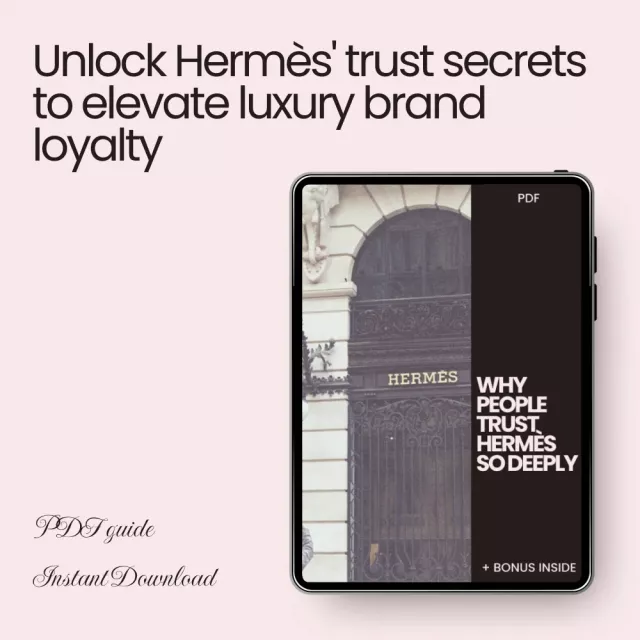
Product Description
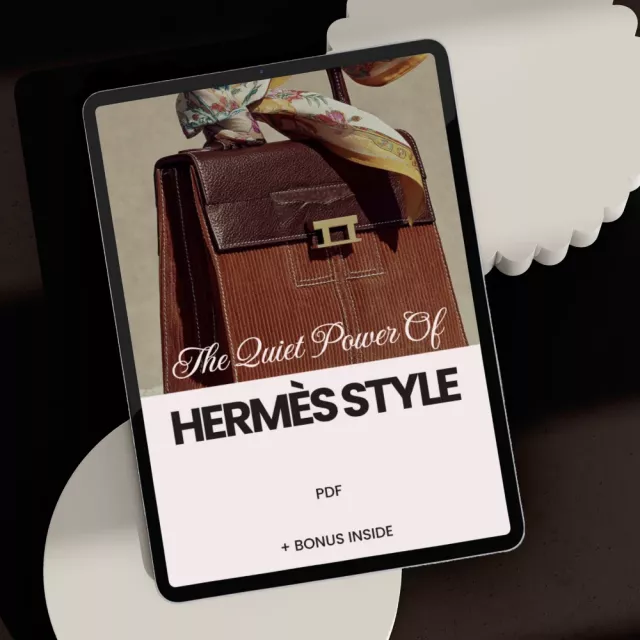
Unlock the Secrets of Why People Trust Hermès So Deeply
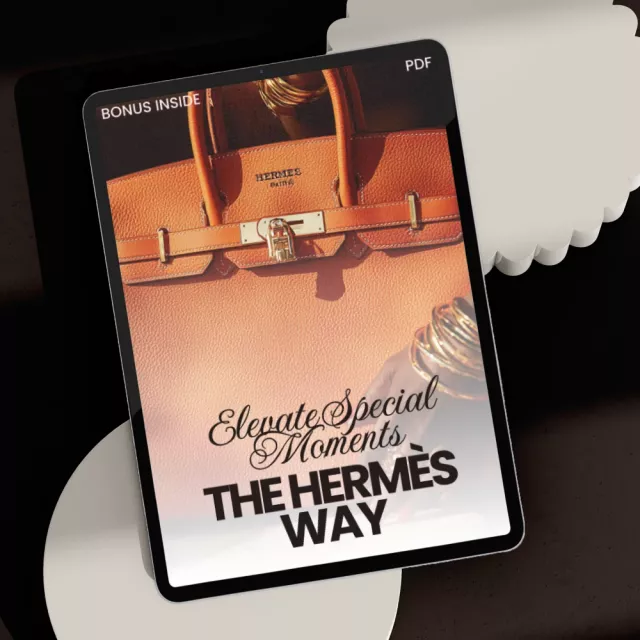
Curious about why Hermès enjoys unparalleled trust among its customers? Discover the behind-the-scenes magic in our exclusive digital guide, Why People Trust Hermès So Deeply. This easy-to-follow, expertly written guide takes you through the essential aspects of the Hermès brand trust, explaining why it holds such a deep connection with its loyal customers. Whether you’re a luxury brand enthusiast or just beginning your journey into the world of high-end labels, this guide will give you a clear understanding of the trust signals that set Hermès apart.
Key Features:
- Comprehensive breakdown of the *Hermès brand trust explained* in 4 detailed chapters
- Insight into Hermès’ heritage, craftsmanship, and consistency over time
- Real-world case study showcasing customer loyalty and long-term brand value
- Practical tips for understanding luxury credibility, including using AI tools
- Myths vs facts: Clear up common misunderstandings about the Hermès brand
Practical Benefits:
- Gain in-depth knowledge of the values and credibility that make Hermès an iconic luxury brand
- Understand what modern buyers look for in brand trust signals, helping you make more informed purchasing decisions
- Learn how to spot myths that can mislead new luxury shoppers
- Discover AI-powered tools and prompt ideas to analyze and evaluate luxury brand credibility
- Develop a deeper connection with luxury brands by recognizing the emotional trust factors beyond the price tag
This guide is perfect for anyone interested in understanding the true meaning behind luxury brand trust. Whether you’re a marketer, a consumer looking to buy luxury goods, or a luxury brand enthusiast, Why People Trust Hermès So Deeply is a must-read resource that offers valuable insights into the Hermès brand trust explained.
What makes this guide different?
While many resources provide general information about luxury brands, this guide specifically focuses on Hermès brand trust explained, breaking down the intricate elements that create lasting loyalty and emotional connections with customers. No other resource dives as deep into the modern-day trust signals, myths, and AI tools used to evaluate brand credibility in the luxury market.
Ready to unlock the secrets of Hermès’ enduring trust? Download your guide now and start exploring the world of luxury credibility!
Shipping & Delivery
SHIPPING
We are proud to offer international shipping services that currently operate in over 200 countries and islands world wide. Nothing means more to us than bringing our customers great value and service. We will continue to grow to meet the needs of all our customers, delivering a service beyond all expectation anywhere in the world.
Do you ship worldwide?
Yes. We provide free shipping to over 200 countries around the world. However, there are some locations we are unable to ship to. If you happen to be located in one of those countries we will contact you.
What about customs?
We are not responsible for any custom fees once the items have been shipped. By purchasing our products, you consent that one or more packages may be shipped to you and may get custom fees when they arrive to your country.
How long does shipping take?
Shipping time varies by location. These are our estimates:| Location | *Estimated Shipping Time |
|---|---|
| United States | 5-20 Business days |
| Canada, Europe | 5-20 Business days |
| Australia, New Zealand | 5-20 Business days |
| Central & South America | 5-25 Business days |
| Asia | 5-20 Business days |
| Africa | 5-25 Business days |
Do you provide tracking information?
Yes, you will receive an email once your order ships that contains your tracking information. If you haven’t received tracking info within 5 days, please contact us.
My tracking says “no information available at the moment”.
For some shipping companies, it takes 2-5 business days for the tracking information to update on the system. If your order was placed more than 5 business days ago and there is still no information on your tracking number, please contact us.
Will my items be sent in one package?
For logistical reasons, items in the same purchase will sometimes be sent in separate packages, even if you've specified combined shipping.
If you have any other questions, please contact us and we will do our best to help you out.
RETURNS
Order cancellation
All orders can be cancelled until they are shipped. If your order has been paid and you need to make a change or cancel an order, you must contact us within 12 hours. Once the packaging and shipping process has started, it can no longer be cancelled.
Refunds
Your satisfaction is our #1 priority. Therefore, you can request a refund or reshipment for ordered products if:
- If you did not receive the product within the guaranteed time (45 days not including 1-3 day processing) you can request a refund or a reshipment.
- If you received the wrong item you can request a refund or a reshipment.
- If you do not want the product you’ve received you may request a refund but you must return the item at your expense and the item must be unused.
We do not issue the refund if:
- Your order did not arrive due to factors within your control (i.e. providing the wrong shipping address)
- Your order did not arrive due to exceptional circumstances outside the control of megaselectionsnook.shop (i.e. not cleared by customs, delayed by a natural disaster).
- Other exceptional circumstances outside the control of megaselectionsnook.shop.
*You can submit refund requests within 15 days after the guaranteed period for delivery (45 days) has expired. You can do it by sending a message on Contact Us page
If you are approved for a refund, then your refund will be processed, and a credit will automatically be applied to your credit card or original method of payment, within 14 days.
Exchanges
If for any reason you would like to exchange your product, perhaps for a different size in clothing, you must contact us first and we will guide you through the steps.
Please do not send your purchase back to us unless we authorise you to do so.
Refunds & Returns
Order cancellation
All orders can be cancelled until they are shipped. If your order has been paid and you need to make a change or cancel an order, you must contact us within 12 hours. Once the packaging and shipping process has started, it can no longer be cancelled.
Refunds
Your satisfaction is our #1 priority. Therefore, you can request a refund or reshipment for ordered products if:
- If you did not receive the product within the guaranteed time( 45 days not including 2-5 day processing) you can request a refund or a reshipment.
- If you received the wrong item you can request a refund or a reshipment.
- If you do not want the product you’ve received you may request a refund but you must return the item at your expense and the item must be unused.
We do not issue the refund if:
- Your order did not arrive due to factors within your control (i.e. providing the wrong shipping address)
- Your order did not arrive due to exceptional circumstances outside the control of megaselectionsnook.shop (i.e. not cleared by customs, delayed by a natural disaster).
- Other exceptional circumstances outside the control of https://marvellio.com
*You can submit refund requests within 15 days after the guaranteed period for delivery (45 days) has expired. You can do it by sending a message on Contact Us page
If you are approved for a refund, then your refund will be processed, and a credit will automatically be applied to your credit card or original method of payment, within 14 days.
Exchanges
If for any reason you would like to exchange your product, perhaps for a different size in clothing. You must contact us first and we will guide you through the steps.
Please do not send your purchase back to us unless we authorise you to do so.
Customer Reviews
See why hundreds love this product and trust us
Based on 34 reviews
Write a Review
We Think You’ll Love
Top picks just for you

















The chapter on emotional trust versus luxury hype completely reframed how I think about my own purchasing patterns. I used to get swept up in seasonal drops and influencer buzz, but this PDF made me realize I was confusing excitement with actual confidence in a brand. The section on consistency over decades was the turning point — it clicked that the brands I keep returning to are the ones that don't chase trends. Now I evaluate every luxury purchase through the lens of long-term reliability, not short-term dopamine 🧠
The myth-busting section alone justified the read.
I've been collecting Hermès for over a decade but never had the vocabulary to explain why I trust the brand so deeply. The part about craftsmanship as visible proof nailed it — when I pick up my Birkin, the stitching and weight just radiate intention. This guide gave me a framework to articulate what I've always felt instinctively.
Sent this to my partner who keeps asking why I'd wait months for a bag instead of buying something available now. The scarcity and controlled growth section explained it better than I ever could.
Sharp writing, zero fluff.
The case study on long-term customer loyalty described my exact behavior — bought a belt in 2016 and came back for a scarf three years later. Reading that pattern laid out analytically was almost eerie. This PDF gets the psychology right in a way most luxury content doesn't even attempt.
🔥👌⭐
I appreciated the distinction between brands built on momentum versus durable credibility. That framing stuck with me and I've already started applying it to other houses I shop from.
The section about what new luxury shoppers miss felt like a direct callout — I was absolutely the person chasing logos 😅
Finished it during one coffee break. Dense with insight.
I work in brand strategy and the framework here is surprisingly rigorous. The idea that visible quality turns promises into physical evidence is something I now reference in client presentations. Wish there were more data points, but the conceptual scaffolding is strong.
The heritage section gave me chills — 1837 to now without losing its core identity.
Clear, well-structured, and respects the reader's intelligence. The chapter on common misunderstandings corrected two assumptions I didn't even know I had about how scarcity functions at Hermès.
Every luxury shopper needs to read the myths section before their next purchase.
Solid content overall but Chapter 4 on AI tools felt underdeveloped compared to the earlier chapters. The prompt ideas were interesting but surface-level. Would have loved to see actual case studies of AI-driven brand analysis rather than just suggested prompts. The first three chapters, though, are excellent — particularly the breakdown of how patience plays into the Hermès relationship model.
I've read dozens of luxury think-pieces and this is the first one that didn't feel like thinly veiled marketing.
❤️✨👜🔑
The emotional trust chapter changed how I talk about luxury with friends. Describing a purchase as a confidence-driven investment instead of a splurge lands completely differently.
Finally someone explains why Hermès feels different without being pretentious about it 🙌
The comparison between hype indicators and performance indicators is a lens I'll use permanently.
Good framework but I wanted more on how different product categories build trust differently. Bags, scarves, and fragrances each carry the brand promise in distinct ways and that nuance was missing.
Quick read that punches way above its weight.
I was skeptical going in — another Hermès PDF? But the section on consistency as discipline genuinely shifted my perspective. In a market where every brand is scrambling to stay relevant through collaborations and viral moments, the argument for measured restraint was refreshing. I also loved how the guide connected craftsmanship directly to trust rather than just aesthetics. My one wish is that it went deeper into how younger buyers specifically are responding to these trust signals, since my generation tends to discover Hermès through social media rather than boutique visits. Still, this is the most thoughtful thing I've read on luxury brand psychology in a long time.
Read it twice. The line about products confirming credibility instead of storytelling doing the work — that's the whole thesis and it's exactly right.
Tight and well-argued from cover to cover.
The wardrobe tracking insight about Hermès items staying in rotation longer than comparable luxury pieces tracks with my own experience. My wallet is eight years old and still looks intentional.
The AI chapter felt like it belonged in a different guide. Chapters 1 through 3 were deeply specific to Hermès trust psychology, and then the pivot to generic AI prompts broke the spell. Would have preferred a deeper dive into resale data or customer sentiment analysis applied directly to the arguments made earlier.
🧡👏⭐⭐⭐
I manage a luxury retail team and forwarded this to all twelve of them. The section on smarter ways to evaluate brand trust gave us a shared vocabulary for client conversations. Practical without being dumbed down.
Wish it existed before I wasted money on hype-driven brands that lost my interest in six months.
Very well-written and insightful, though I think the scarcity argument could acknowledge more openly that limited availability also frustrates loyal customers. The tension between quality control and accessibility deserves a fuller treatment.
The point about longevity reducing perceived risk is simple but I'd never seen it stated so clearly before 💡
Bookmarked the smarter evaluation section for the next time someone tells me luxury is just about price tags.
Strong overall but the AI prompts at the end felt like an afterthought rather than an integrated chapter.