-
Shop
- Advanced Technologies
- AI Career Advantage Collection
- AI Skills
- AI Skills for Creators & Freelancers
- AI Client Management
- AI Ethics
- AI Mindset
- AI Tools & Prompts
- AI Writing & Content Creation
- Audio, Voice & Music
- Design & Visual Creation
- Email, Messaging & Communication
- Freelancing & Business
- Marketing, Ads & Conversion
- Productivity, Workflow & Automation
- SEO & Search Optimization
- Social Media Content & Growth
- Strategy, Planning & Analytics
- Video Creation & Editing
- AI Skills Mastery 2026 Collection
- Bathroom
- Calvin Klein
- Car Accessories
- Confidence
- Dating & Social Skills
- Digital Resources
- Beauty
- Budgeting & Saving
- Car Buying & Ownership
- Cozy Feast Collection
- Electronics & Technology
- Emotional Intelligence
- Entrepreneurship & Business Growth
- Financial Education
- Financial Independence
- Financial Mindset & Psychology
- Goal Setting
- Hobbies
- Home Styling & Organization
- Leadership
- Mindfulness
- Mindset
- Motivation
- Online Business
- Parenting & Child Development
- Personal Style & Fashion
- Pet Lifestyle & Wellness
- Positive Thinking
- Productivity
- Self Confidence
- Sleep Improvement
- Smart Life with AI
- Stress Management & Relaxation
- Travel Planning
- Wellness
- Yoga & Fitness
- Yoga & Mind-Body Practices
- Education & Learning
- Family & Parenting
- Furniture
- Health & Wellness
- Home Electronics
- Kitchen
- Lighting
- Luxury Brands Collection
- Nike
- Online Business for Beginners
- Parenting Guides Collection
- Patio, Lawn & Garden
- Personal Growth
- Pet Care
- Pet Supplies
- Smart Amazon Shopping
- Smart Home Living Guides
- TikTok Growth & Monetization Mastery
- Travel
- Travel & Adventure
- Wealth
- Wealth Building
- Popular
- Best deals



Product Description
Understand What Truly Sets Hermès Apart
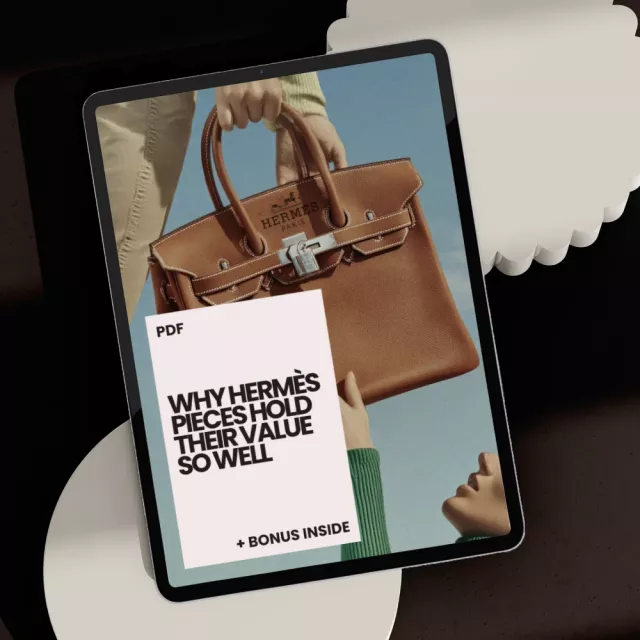
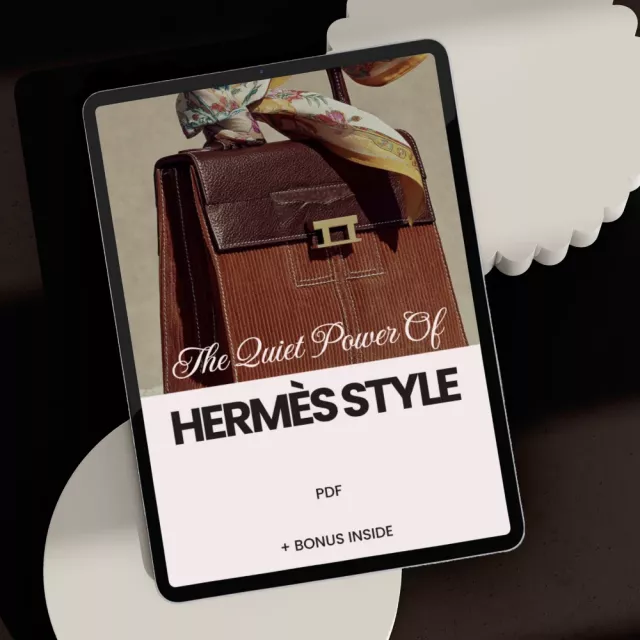
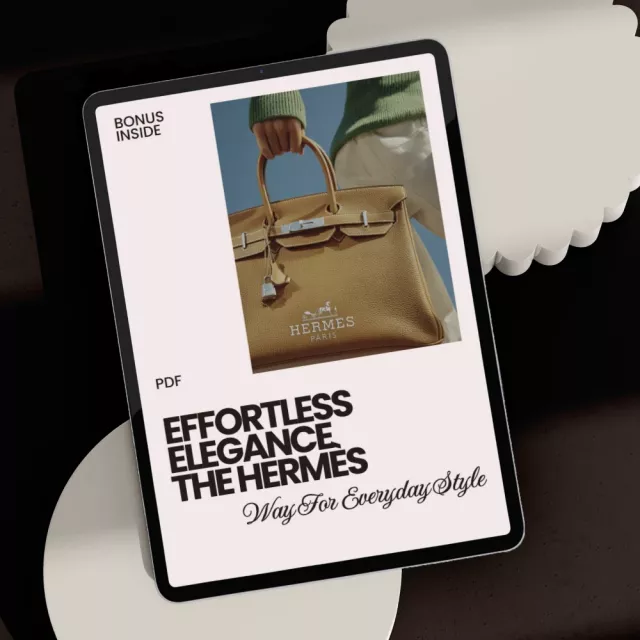
If you’ve ever wondered why Hermès holds its value, commands waiting lists, and operates so differently from other fashion houses, this guide gives you the clarity you’ve been looking for. How Hermès Compares to Other Luxury Brands is a professionally structured digital guide designed to break down the real differences between Hermès and its competitors—without hype, bias, or brand mythology. Whether you’re a collector, investor, fashion enthusiast, or simply curious about the power dynamics inside luxury, this guide delivers a strategic and insightful hermès brand comparison with other luxury brands that goes far beyond surface-level opinions.
What’s Inside the Guide
- Chapter 1: What Makes Hermès Structurally Different
- Heritage Versus Fashion Cycles
- Craftsmanship Compared to Mass Luxury
- The Quiet Luxury Position
- Chapter 2: Hermès Versus Other Luxury Giants
- Hermès and Logo-Driven Brands
- Case Study of Market Perception
- Where Hermès Wins and Where It Doesn’t
- Chapter 3: Common Comparison Mistakes Buyers Make
- Misreading Price Versus Value
- Overlooking Brand Strategy
- Smarter Ways to Compare
- Chapter 4: Using AI to Compare Luxury Brands
- AI Tools for Brand Analysis
- High-Value Prompt Ideas
Why This Guide Is Different
Unlike generic blog posts or brand-biased comparisons, this guide approaches luxury from a structural and strategic perspective. You won’t just learn which brand is “better.” Instead, you’ll understand why they operate differently, how market perception is shaped, and how to evaluate value intelligently. This hermès brand comparison with other luxury brands is built on business models, craftsmanship standards, positioning strategies, and long-term brand equity—not trends or influencer opinions.
Who This Is For
- Luxury buyers deciding between Hermès and other major fashion houses
- Collectors and resale investors analyzing long-term value
- Fashion students and brand strategists studying luxury positioning
- Anyone curious about why Hermès plays by different rules
Practical Benefits You’ll Gain
- Make smarter purchasing decisions with clearer value assessment
- Avoid common comparison mistakes that cost buyers thousands
- Understand how brand strategy influences price and exclusivity
- Use AI tools to perform your own luxury brand evaluations
- Gain confidence when discussing or investing in high-end fashion
Instant Digital Download
This is a convenient digital download, giving you immediate access after purchase. Read it on your phone, tablet, or desktop and revisit it whenever you need clarity before your next luxury investment.
If you’re ready to stop guessing and start understanding luxury at a deeper level, download How Hermès Compares to Other Luxury Brands today and transform the way you evaluate high-end fashion.
Shipping & Delivery
SHIPPING
We are proud to offer international shipping services that currently operate in over 200 countries and islands world wide. Nothing means more to us than bringing our customers great value and service. We will continue to grow to meet the needs of all our customers, delivering a service beyond all expectation anywhere in the world.
Do you ship worldwide?
Yes. We provide free shipping to over 200 countries around the world. However, there are some locations we are unable to ship to. If you happen to be located in one of those countries we will contact you.
What about customs?
We are not responsible for any custom fees once the items have been shipped. By purchasing our products, you consent that one or more packages may be shipped to you and may get custom fees when they arrive to your country.
How long does shipping take?
Shipping time varies by location. These are our estimates:| Location | *Estimated Shipping Time |
|---|---|
| United States | 5-20 Business days |
| Canada, Europe | 5-20 Business days |
| Australia, New Zealand | 5-20 Business days |
| Central & South America | 5-25 Business days |
| Asia | 5-20 Business days |
| Africa | 5-25 Business days |
Do you provide tracking information?
Yes, you will receive an email once your order ships that contains your tracking information. If you haven’t received tracking info within 5 days, please contact us.
My tracking says “no information available at the moment”.
For some shipping companies, it takes 2-5 business days for the tracking information to update on the system. If your order was placed more than 5 business days ago and there is still no information on your tracking number, please contact us.
Will my items be sent in one package?
For logistical reasons, items in the same purchase will sometimes be sent in separate packages, even if you've specified combined shipping.
If you have any other questions, please contact us and we will do our best to help you out.
RETURNS
Order cancellation
All orders can be cancelled until they are shipped. If your order has been paid and you need to make a change or cancel an order, you must contact us within 12 hours. Once the packaging and shipping process has started, it can no longer be cancelled.
Refunds
Your satisfaction is our #1 priority. Therefore, you can request a refund or reshipment for ordered products if:
- If you did not receive the product within the guaranteed time (45 days not including 1-3 day processing) you can request a refund or a reshipment.
- If you received the wrong item you can request a refund or a reshipment.
- If you do not want the product you’ve received you may request a refund but you must return the item at your expense and the item must be unused.
We do not issue the refund if:
- Your order did not arrive due to factors within your control (i.e. providing the wrong shipping address)
- Your order did not arrive due to exceptional circumstances outside the control of megaselectionsnook.shop (i.e. not cleared by customs, delayed by a natural disaster).
- Other exceptional circumstances outside the control of megaselectionsnook.shop.
*You can submit refund requests within 15 days after the guaranteed period for delivery (45 days) has expired. You can do it by sending a message on Contact Us page
If you are approved for a refund, then your refund will be processed, and a credit will automatically be applied to your credit card or original method of payment, within 14 days.
Exchanges
If for any reason you would like to exchange your product, perhaps for a different size in clothing, you must contact us first and we will guide you through the steps.
Please do not send your purchase back to us unless we authorise you to do so.
Refunds & Returns
Order cancellation
All orders can be cancelled until they are shipped. If your order has been paid and you need to make a change or cancel an order, you must contact us within 12 hours. Once the packaging and shipping process has started, it can no longer be cancelled.
Refunds
Your satisfaction is our #1 priority. Therefore, you can request a refund or reshipment for ordered products if:
- If you did not receive the product within the guaranteed time( 45 days not including 2-5 day processing) you can request a refund or a reshipment.
- If you received the wrong item you can request a refund or a reshipment.
- If you do not want the product you’ve received you may request a refund but you must return the item at your expense and the item must be unused.
We do not issue the refund if:
- Your order did not arrive due to factors within your control (i.e. providing the wrong shipping address)
- Your order did not arrive due to exceptional circumstances outside the control of megaselectionsnook.shop (i.e. not cleared by customs, delayed by a natural disaster).
- Other exceptional circumstances outside the control of https://marvellio.com
*You can submit refund requests within 15 days after the guaranteed period for delivery (45 days) has expired. You can do it by sending a message on Contact Us page
If you are approved for a refund, then your refund will be processed, and a credit will automatically be applied to your credit card or original method of payment, within 14 days.
Exchanges
If for any reason you would like to exchange your product, perhaps for a different size in clothing. You must contact us first and we will guide you through the steps.
Please do not send your purchase back to us unless we authorise you to do so.
Customer Reviews
See why hundreds love this product and trust us
Based on 79 reviews
Write a Review
We Think You’ll Love
Top picks just for you













Finally someone explained why Hermès holds value so differently than other bags I own.
The section on quiet luxury completely changed how I think about my next purchase. I used to chase logos and now I understand why my Chanel pieces feel dated while my Kelly still looks fresh.
Short but packed with insight — read it in one sitting.
This validated every instinct I had about investing in Hermès over trendier brands.
The craftsmanship comparison section alone was worth downloading this. I've spent years buying luxury without understanding production philosophy and now I feel like I've been shopping blind. My husband even read it and finally gets why I want a Birkin over another LV.
Wish I had this before I spent $4k on a bag I stopped carrying after one season.
Really solid breakdown of price versus value — that reframe hit hard.
Gave this to my sister who keeps asking why I save for Hermès instead of buying three designer bags. She gets it now 😂
Elegant, concise, and genuinely useful for anyone building a luxury wardrobe with intention.
The market perception case study was eye-opening. I always assumed higher price meant better, but the way this breaks down how design restraint drives perceived value over time made me rethink my entire collection. I actually pulled out all my bags last weekend and could immediately see which ones aged well versus which ones screamed 2019.
Clean writing, no fluff, straight to the point.
Four stars only because I wanted more on specific bag comparisons. The framework is excellent though — the bit about comparing on resale performance and design longevity instead of sticker price was a perspective shift for me.
Read this on a flight and immediately texted my best friend to read it too.
⭐❤️🔥👏
The logo-driven brands comparison was spot on. I own pieces from both camps and the difference in how they age is real.
Smart and well-structured read.
I've been collecting luxury for fifteen years and still learned something new here. The point about brand strategy being the real differentiator — not just materials or price — reframed how I evaluate everything. Before reading this I was seriously considering a Dior piece, but after sitting with the comparison framework I redirected that budget toward a more timeless Hermès scarf. No regrets. My closet is slowly becoming more curated and less reactive, and this PDF played a real part in that shift.
Passed this around my luxury resale group chat and everyone had the same reaction.
Helpful lens for thinking about luxury purchases long-term.
The AI prompts at the end were a nice bonus. Already used two of them to research resale trends before a purchase and the results were so much better than my usual googling.
Three stars because it leans heavily pro-Hermès without enough counterargument. The trade-offs section acknowledges weaknesses briefly but I wanted more balance. That said, the comparison framework itself is genuinely useful.
Short, smart, no wasted words.
This shifted my perspective from collecting pieces to building a wardrobe. The distinction between seasonal excitement and long-term authority really stuck with me.
Shared it with two friends who are always debating Hermès vs Chanel.
I appreciated the honest take on where Hermès doesn't win. The acknowledgment that it moves slower and has fewer entry points made me trust the rest of the analysis more. Too many luxury guides read like ads.
Could use more visuals but the content is solid.
Cost per wear — that concept alone justified reading this.
Surprisingly nuanced for a free PDF 👏
I was on the fence about my first Hermès purchase for months. After reading the section on craftsmanship and how their artisan-led production creates a different emotional experience, I went ahead with a small leather good. Three months in and I reach for it every single day. The quality difference is tangible in a way I didn't expect.
Quick read with lasting impact on how I shop.
The framework for smarter comparisons is what sets this apart from typical brand fluff pieces.
Bought three luxury items since reading this and each decision felt sharper.
Four stars — great content but a bit too short on the competitive analysis. I wanted deeper dives into specific brands beyond the general logo-driven category.
The heritage vs fashion cycles section is the clearest explanation I've read of why some brands just feel different.
👜✨💎❤️🔥
Made me realize I was comparing brands all wrong.
Loved the point about recognition through knowledge versus obvious signals. That framing unlocked something for me about why I gravitate toward certain pieces. It's not about hiding wealth — it's about a different kind of communication entirely.
Tight writing. Felt like getting advice from a very informed friend.
I've read a dozen luxury comparison articles and none framed it this clearly.
Good overview but I wish it went deeper on resale data.
The quiet luxury breakdown was the standout section for me. I sent it to a friend who's always asking why Hermès bags don't have giant logos and she finally understood the whole strategy.
Practical and refreshingly free of hype.
Three stars — well written but the AI chapter felt tacked on and less developed than the rest. The first three chapters are excellent though and worth reading on their own.
The wardrobe analysis example really drove the point home about perception gaps not always matching price gaps. Before this I assumed expensive automatically meant timeless. Now I evaluate differently — I look at silhouette stability, how the brand handles trends, and whether I can picture wearing something in five years. Totally changed my shopping habits.
Solid four stars. Great on the why, could use more on the how of actually shopping Hermès as a newcomer.
Every luxury buyer should read this before their next purchase.
The controlled scarcity point explains so much about Hermès pricing.
Concise and well-argued — rare combo in luxury content.
I keep coming back to the point about evaluating craftsmanship consistency over logo visibility. Such a simple reframe but it's changed how I look at everything from bags to watches.
Three stars. Solid entry point but not much here for someone already deep in the luxury space. If you're newer to Hermès or considering your first piece, this is very helpful though.
Perfectly paced — never felt padded or thin.
Read it, re-read it, then reorganized my closet.
The AI prompts are actually useful, not just filler.
I was spending impulsively on seasonal pieces for years. This PDF made me stop and think about what a long-term wardrobe strategy actually looks like. The comparison between how Hermès products age versus trend-heavy luxury items was the wake-up call. I've since sold three bags that no longer felt relevant and put the money toward one piece I'll carry for a decade.
Needed this reality check before buying season 🙌
Worth the ten minutes. Changed how I evaluate resale.
Thoughtful and well-paced. Only ding is I wanted specific brand-to-brand matchups rather than general categories.
Clean, smart, useful.
The distinction between seasonal reinvention and gradual refinement as brand strategies clarified years of confusion I had about why some luxury houses feel unstable while Hermès stays consistent. Really well articulated.
Read it in under fifteen minutes and took away more than most books on luxury.
Four stars for solid analysis, minus one because the ending felt a bit abrupt.
This is the guide I wish existed when I started buying luxury five years ago. I made every comparison mistake listed in chapter three — focusing on price tags, ignoring brand strategy, treating all luxury houses as interchangeable. If I could go back, I'd have half the bags and twice the satisfaction.
Understated and intelligent, kind of like the brand itself.
The production philosophy comparison hit differently when I held my Hermès bag next to a competitor's afterward. You can feel the difference in the leather structure and stitching once you know what to look for.
Straightforward and grounded in reality rather than brand worship.
Four stars — really well-written and informative but would love a follow-up that goes into watches and jewelry comparisons too.
Finally a luxury comparison that doesn't just rank brands by price.
Three stars for me. I agree with the overall thesis but some claims about market perception felt unsourced. Would have loved to see actual resale data or survey numbers backing up the points. The framework itself is sound though.
Punchy, focused, and surprisingly rereadable.
My mom has been saying everything in this PDF for years and I finally believe her 😅
Loved the emphasis on distribution discipline as a comparison metric. Never thought about it that way but it explains so much about why some brands feel overexposed.
Worth sharing with anyone debating their next luxury investment.
Four stars. Excellent first three chapters, but the AI chapter could have been expanded or cut entirely — it felt like a different document.
The best free luxury resource I've come across this year.
Design longevity as a comparison axis — that one concept was worth the entire read for me.
👌🧡👜
Four stars — genuinely insightful but I noticed it barely touches ready-to-wear, focusing almost entirely on bags and leather goods.
Sharp and honest without being preachy. Rare for luxury content.
Three stars because while the writing is polished, I felt it could acknowledge more openly that Hermès' scarcity model frustrates many loyal customers. The trade-offs section was too brief on this. Still, the comparison framework is useful and I've already applied it.