-
Shop
- Advanced Technologies
- AI Career Advantage Collection
- AI Skills
- AI Skills for Creators & Freelancers
- AI Client Management
- AI Ethics
- AI Mindset
- AI Tools & Prompts
- AI Writing & Content Creation
- Audio, Voice & Music
- Design & Visual Creation
- Email, Messaging & Communication
- Freelancing & Business
- Marketing, Ads & Conversion
- Productivity, Workflow & Automation
- SEO & Search Optimization
- Social Media Content & Growth
- Strategy, Planning & Analytics
- Video Creation & Editing
- AI Skills Mastery 2026 Collection
- Bathroom
- Calvin Klein
- Car Accessories
- Confidence
- Dating & Social Skills
- Digital Resources
- Beauty
- Budgeting & Saving
- Car Buying & Ownership
- Cozy Feast Collection
- Electronics & Technology
- Emotional Intelligence
- Entrepreneurship & Business Growth
- Financial Education
- Financial Independence
- Financial Mindset & Psychology
- Goal Setting
- Hobbies
- Home Styling & Organization
- Leadership
- Mindfulness
- Mindset
- Motivation
- Online Business
- Parenting & Child Development
- Personal Style & Fashion
- Pet Lifestyle & Wellness
- Positive Thinking
- Productivity
- Self Confidence
- Sleep Improvement
- Smart Life with AI
- Stress Management & Relaxation
- Travel Planning
- Wellness
- Yoga & Fitness
- Yoga & Mind-Body Practices
- Education & Learning
- Family & Parenting
- Furniture
- Health & Wellness
- Home Electronics
- Kitchen
- Lighting
- Luxury Brands Collection
- Nike
- Online Business for Beginners
- Parenting Guides Collection
- Patio, Lawn & Garden
- Personal Growth
- Pet Care
- Pet Supplies
- Smart Amazon Shopping
- Smart Home Living Guides
- TikTok Growth & Monetization Mastery
- Travel
- Travel & Adventure
- Wealth
- Wealth Building
- Popular
- Best deals





Product Description
Bring Luxury Into Everyday Life—The Right Way
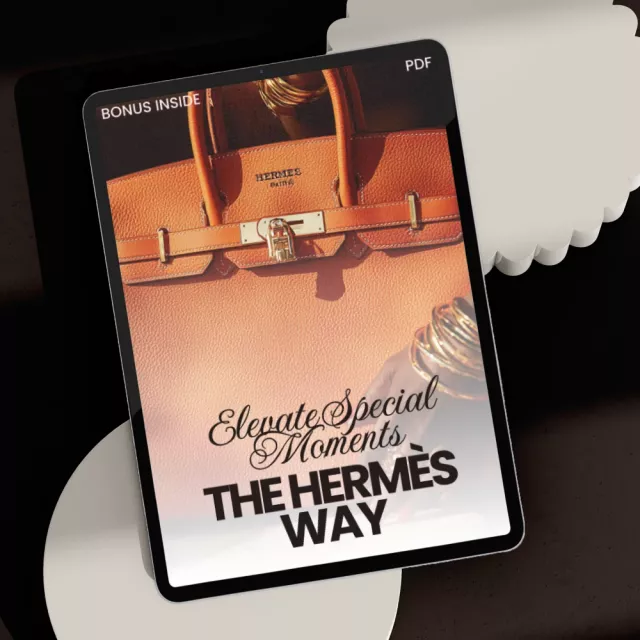
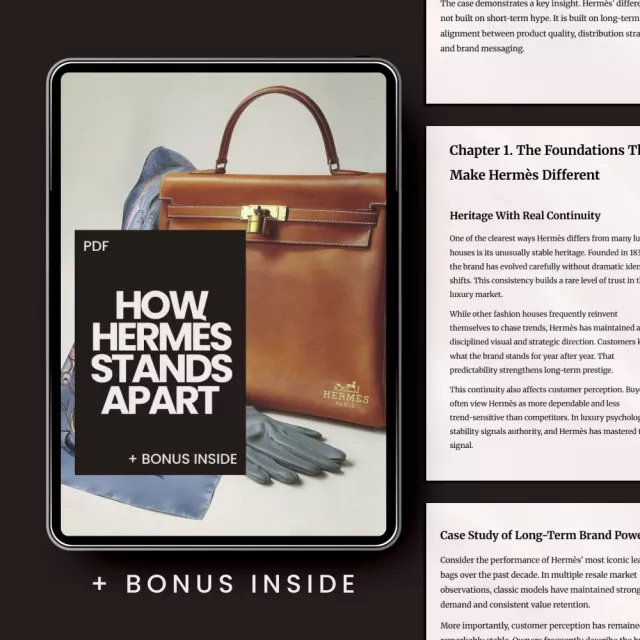
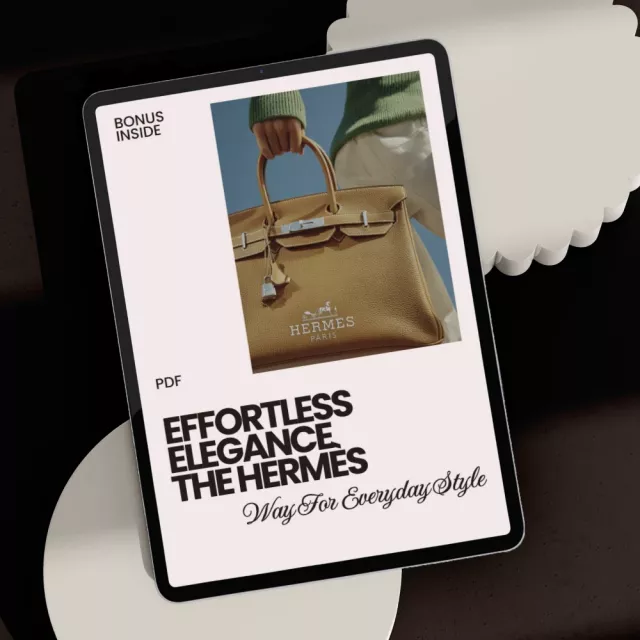
Hermès has never been just about a bag or a scarf. It’s about a way of living. How Hermès Fits Into Real Life is a thoughtfully designed digital guide that explores how hermès connects with lifestyle in a way that feels natural, intentional, and aligned with who you truly are. Instead of chasing status or trends, this guide helps you understand how to integrate Hermès into your daily routines, wardrobe choices, and long-term lifestyle vision with confidence and clarity.
What’s Inside This Guide
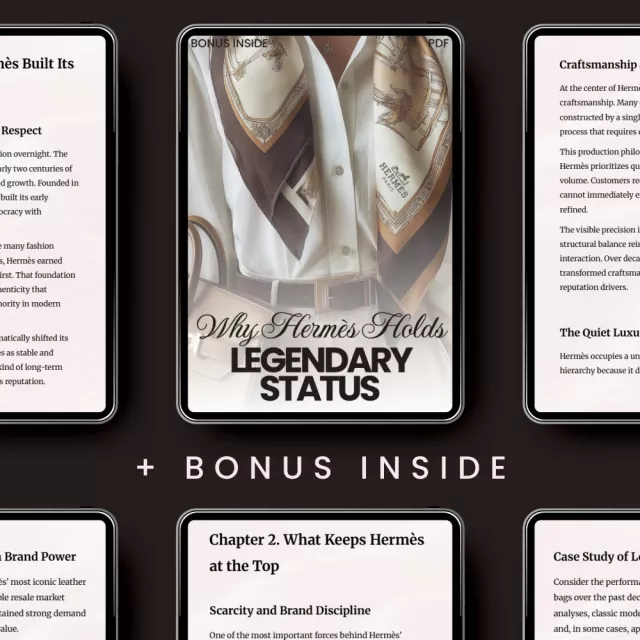
- Chapter 1: The Lifestyle Philosophy Behind Hermès – Explore the values the brand represents, why lifestyle alignment matters, and how to embody the quiet luxury mindset.
- Chapter 2: Where Hermès Naturally Belongs – Discover everyday routines that match the brand, a real-life case study of lifestyle fit, and environments where Hermès thrives effortlessly.
- Chapter 3: Common Lifestyle Mismatches – Learn when Hermès feels forced, the mistakes buyers often make, and practical steps to realign your wardrobe.
- Chapter 4: Using AI to Personalize Your Hermès Strategy – Get introduced to AI tools for style matching, plus smart prompt examples to refine your personal luxury approach.
Why You’ll Love It
- Gain clarity on whether Hermès truly fits your lifestyle
- Avoid costly purchasing mistakes
- Build a wardrobe that feels cohesive and authentic
- Understand the deeper philosophy behind quiet luxury
- Use AI strategically to make smarter style decisions
Who This Is For
This guide is perfect for aspiring and current Hermès buyers, quiet luxury enthusiasts, wardrobe strategists, and anyone curious about how hermès connects with lifestyle beyond surface-level aesthetics. Whether you’re planning your first purchase or refining a curated collection, this resource offers grounded, practical insight.
What Makes This Guide Different
Unlike trend-driven fashion eBooks, How Hermès Fits Into Real Life focuses on alignment over aspiration. It combines lifestyle psychology, wardrobe strategy, and modern AI tools into one cohesive framework. You’re not just learning what to buy—you’re learning why, when, and how it fits into your real, everyday world.
Download Your Guide Today
Luxury feels best when it feels authentic. If you’re ready to approach Hermès with clarity, intention, and confidence, this digital guide is your next step. Download How Hermès Fits Into Real Life today and start building a lifestyle where luxury truly belongs.
Shipping & Delivery
SHIPPING
We are proud to offer international shipping services that currently operate in over 200 countries and islands world wide. Nothing means more to us than bringing our customers great value and service. We will continue to grow to meet the needs of all our customers, delivering a service beyond all expectation anywhere in the world.
Do you ship worldwide?
Yes. We provide free shipping to over 200 countries around the world. However, there are some locations we are unable to ship to. If you happen to be located in one of those countries we will contact you.
What about customs?
We are not responsible for any custom fees once the items have been shipped. By purchasing our products, you consent that one or more packages may be shipped to you and may get custom fees when they arrive to your country.
How long does shipping take?
Shipping time varies by location. These are our estimates:| Location | *Estimated Shipping Time |
|---|---|
| United States | 5-20 Business days |
| Canada, Europe | 5-20 Business days |
| Australia, New Zealand | 5-20 Business days |
| Central & South America | 5-25 Business days |
| Asia | 5-20 Business days |
| Africa | 5-25 Business days |
Do you provide tracking information?
Yes, you will receive an email once your order ships that contains your tracking information. If you haven’t received tracking info within 5 days, please contact us.
My tracking says “no information available at the moment”.
For some shipping companies, it takes 2-5 business days for the tracking information to update on the system. If your order was placed more than 5 business days ago and there is still no information on your tracking number, please contact us.
Will my items be sent in one package?
For logistical reasons, items in the same purchase will sometimes be sent in separate packages, even if you've specified combined shipping.
If you have any other questions, please contact us and we will do our best to help you out.
RETURNS
Order cancellation
All orders can be cancelled until they are shipped. If your order has been paid and you need to make a change or cancel an order, you must contact us within 12 hours. Once the packaging and shipping process has started, it can no longer be cancelled.
Refunds
Your satisfaction is our #1 priority. Therefore, you can request a refund or reshipment for ordered products if:
- If you did not receive the product within the guaranteed time (45 days not including 1-3 day processing) you can request a refund or a reshipment.
- If you received the wrong item you can request a refund or a reshipment.
- If you do not want the product you’ve received you may request a refund but you must return the item at your expense and the item must be unused.
We do not issue the refund if:
- Your order did not arrive due to factors within your control (i.e. providing the wrong shipping address)
- Your order did not arrive due to exceptional circumstances outside the control of megaselectionsnook.shop (i.e. not cleared by customs, delayed by a natural disaster).
- Other exceptional circumstances outside the control of megaselectionsnook.shop.
*You can submit refund requests within 15 days after the guaranteed period for delivery (45 days) has expired. You can do it by sending a message on Contact Us page
If you are approved for a refund, then your refund will be processed, and a credit will automatically be applied to your credit card or original method of payment, within 14 days.
Exchanges
If for any reason you would like to exchange your product, perhaps for a different size in clothing, you must contact us first and we will guide you through the steps.
Please do not send your purchase back to us unless we authorise you to do so.
Refunds & Returns
Order cancellation
All orders can be cancelled until they are shipped. If your order has been paid and you need to make a change or cancel an order, you must contact us within 12 hours. Once the packaging and shipping process has started, it can no longer be cancelled.
Refunds
Your satisfaction is our #1 priority. Therefore, you can request a refund or reshipment for ordered products if:
- If you did not receive the product within the guaranteed time( 45 days not including 2-5 day processing) you can request a refund or a reshipment.
- If you received the wrong item you can request a refund or a reshipment.
- If you do not want the product you’ve received you may request a refund but you must return the item at your expense and the item must be unused.
We do not issue the refund if:
- Your order did not arrive due to factors within your control (i.e. providing the wrong shipping address)
- Your order did not arrive due to exceptional circumstances outside the control of megaselectionsnook.shop (i.e. not cleared by customs, delayed by a natural disaster).
- Other exceptional circumstances outside the control of https://marvellio.com
*You can submit refund requests within 15 days after the guaranteed period for delivery (45 days) has expired. You can do it by sending a message on Contact Us page
If you are approved for a refund, then your refund will be processed, and a credit will automatically be applied to your credit card or original method of payment, within 14 days.
Exchanges
If for any reason you would like to exchange your product, perhaps for a different size in clothing. You must contact us first and we will guide you through the steps.
Please do not send your purchase back to us unless we authorise you to do so.
Customer Reviews
See why hundreds love this product and trust us
Based on 34 reviews
Write a Review
We Think You’ll Love
Top picks just for you











The lifestyle alignment concept reframed how I think about luxury purchases.
The mismatch section was surprisingly honest — most guides just tell you to buy more. This one actually talks about when a piece doesn't belong in your routine and why that matters. Refreshing perspective.
Short, sharp, and zero fluff 🤌
I bought a statement-colored bag last year that sat in my closet for months because it didn't match anything I actually wore. After reading the section on buyer mistakes I understood exactly why — I was shopping emotionally instead of strategically. Sold the bag, replaced it with a neutral one, and now it comes with me everywhere. The cost-per-wear concept finally clicked.
What sets this apart is the focus on daily routines rather than aspirational fantasy. The part about professional environments where quiet confidence lands harder than bold logos rang so true for my consulting life 👏
Finished it over lunch and immediately reevaluated two purchases.
The consultant case study mirrors my own experience almost exactly. One structured bag changed how colleagues perceived my entire wardrobe even though I barely changed anything else. Alignment over accumulation — that lesson alone is worth the read.
Useful framework but I wanted more examples beyond corporate settings.
I used to pair my nicer accessories with whatever was clean that morning. The section on how low-quality basics create a visible contrast with luxury pieces explained why my outfits never looked cohesive. Now I build from the foundation up. Tailored trousers, clean knits, structured outerwear — then the accessories land. The visual difference after just three wardrobe swaps was immediate and my husband noticed before I even said anything.
🤎👜✨👌🔥
The point about Hermès needing visual breathing room stuck with me. I stopped stacking accessories and started letting one piece anchor the outfit. Everything looks more intentional now.
Solid take on lifestyle-first styling. The AI prompts section felt a bit surface-level compared to the rest, but the wardrobe realignment advice more than made up for it.
Made me rethink two items sitting untouched in my closet.
I work in law and my wardrobe was already neutral and structured but something still felt off. This guide helped me see that my accessories were pulling in too many directions — a trendy crossbody here, a chunky chain there, nothing cohesive. I stripped it back to one clean bag and a silk scarf rotation. Within a week a senior partner complimented my presentation and I hadn't changed a single clothing item. The section on environments where the brand thrives described my office so perfectly I wondered if someone had visited. Even the travel advice about leather goods transitioning between settings proved true on a recent client trip to Chicago.
The wardrobe realignment section treats this as calibration, not a total overhaul, which felt realistic and doable. Already started with better basics and the difference is noticeable.
Quick read that actually changed my shopping behavior.
Great concepts but a few more visual examples would have helped.
The idea that luxury purchases fail when they're disconnected from your actual life hit harder than any styling tip I've read. Practical and grounded.
The quiet luxury mindset section drew a clear line between looking trend-driven and looking composed. I've been chasing trends for years and this explained why my closet felt chaotic even though I spent a lot. Now I evaluate every piece by whether it supports consistency across settings, not whether it photographs well for one outfit.
Stopped impulse-buying the week I read this 🙌
The section on when the brand feels forced was what I needed. I'd been wearing a structured bag with athleisure and couldn't figure out why it looked wrong. Now I either dress up the base or save the bag for days that match.
Fewer pages than I expected but every one earned its place.
What I love is the honesty about mismatches. Most luxury content just pushes you to buy more, but this openly discusses when a piece doesn't fit your life and gives concrete steps to either realign or let it go. The gradual upgrade approach — structured outerwear first, then footwear, then accessories — gave me a clear sequence to follow.
⭐🧣👠🤍👍✨
I read this right before a work trip and tested the travel advice in real time. My neutral leather tote moved seamlessly from the airport to client dinner to Saturday brunch — zero outfit changes needed. That versatility section is spot on.
The values breakdown at the start grounded everything that followed.
The idea of using strategic buying over emotional buying was the shift I didn't know I needed. I've already paused on three purchases that would have sat unused 💯
The case study about the consultant adding one bag and getting noticeably more polished feedback from colleagues — that's exactly what happened to me. I work in finance and swapped my worn tote for a clean top-handle in camel. Nothing else changed. Two people in my team said I looked like I'd had a style refresh. The guide explains why this works: the rest of the wardrobe was already aligned, so the bag just elevated what was there.
👜🔥🤎⭐
Pairing luxury with low-quality basics was my exact problem — this explained the disconnect clearly. The fix was simpler than I thought: upgrade the foundation and the accessories suddenly look intentional.
Taught me to shop with my actual schedule in mind.
Lean and practical — no wasted paragraphs.
I spent the last two years buying pieces I thought would transform my style overnight and instead ended up with a closet full of disconnected items. This guide broke down exactly why — I was skipping the foundation entirely. The realignment section convinced me to sell four items that didn't match my daily life and reinvest in two quality basics. Within a month my outfits started looking cohesive for the first time. The point about Hermès performing best when it complements existing habits instead of trying to transform them is something I wish I'd heard before dropping serious money. Now every purchase starts with one question: does this fit my actual week? It's saved me from at least three regrettable buys already.
Alignment over accumulation — that's the whole thesis and it works.