-
Shop
- Advanced Technologies
- AI Career Advantage Collection
- AI Skills
- AI Skills for Creators & Freelancers
- AI Client Management
- AI Ethics
- AI Mindset
- AI Tools & Prompts
- AI Writing & Content Creation
- Audio, Voice & Music
- Design & Visual Creation
- Email, Messaging & Communication
- Freelancing & Business
- Marketing, Ads & Conversion
- Productivity, Workflow & Automation
- SEO & Search Optimization
- Social Media Content & Growth
- Strategy, Planning & Analytics
- Video Creation & Editing
- AI Skills Mastery 2026 Collection
- Bathroom
- Calvin Klein
- Car Accessories
- Confidence
- Dating & Social Skills
- Digital Resources
- Beauty
- Budgeting & Saving
- Car Buying & Ownership
- Cozy Feast Collection
- Electronics & Technology
- Emotional Intelligence
- Entrepreneurship & Business Growth
- Financial Education
- Financial Independence
- Financial Mindset & Psychology
- Goal Setting
- Hobbies
- Home Styling & Organization
- Leadership
- Mindfulness
- Mindset
- Motivation
- Online Business
- Parenting & Child Development
- Personal Style & Fashion
- Pet Lifestyle & Wellness
- Positive Thinking
- Productivity
- Self Confidence
- Sleep Improvement
- Smart Life with AI
- Stress Management & Relaxation
- Travel Planning
- Wellness
- Yoga & Fitness
- Yoga & Mind-Body Practices
- Education & Learning
- Family & Parenting
- Furniture
- Health & Wellness
- Home Electronics
- Kitchen
- Lighting
- Luxury Brands Collection
- Nike
- Online Business for Beginners
- Parenting Guides Collection
- Patio, Lawn & Garden
- Personal Growth
- Pet Care
- Pet Supplies
- Smart Amazon Shopping
- Smart Home Living Guides
- TikTok Growth & Monetization Mastery
- Travel
- Travel & Adventure
- Wealth
- Wealth Building
- Popular
- Best deals


Product Description
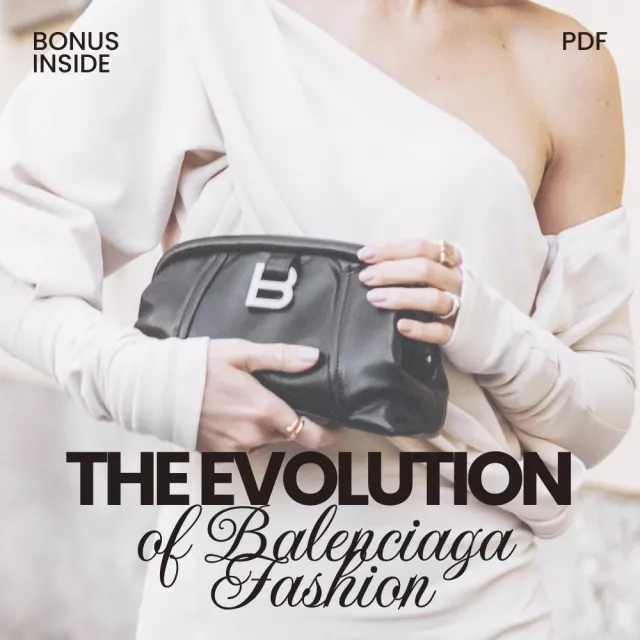
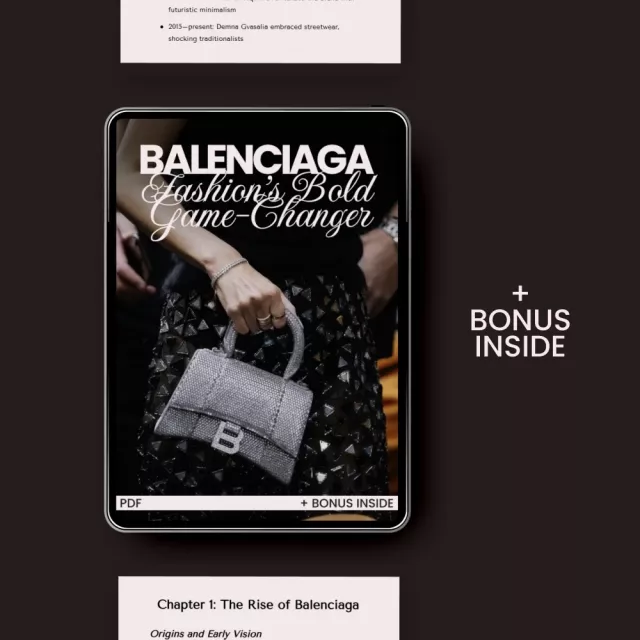
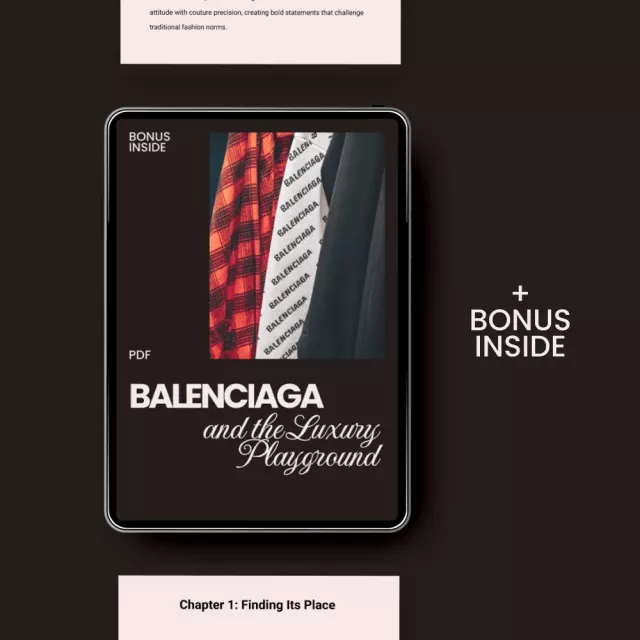
Discover the Secrets of Balenciaga’s Trust-Building Success
In the world of luxury fashion, few brands evoke the same level of admiration and intrigue as Balenciaga. Known for its bold and avant-garde approach to fashion, Balenciaga has built a unique reputation that resonates deeply with consumers. But what exactly makes people trust the brand? This exclusive guide, “How Balenciaga Builds Trust,” offers an in-depth exploration of how Balenciaga’s DNA, legacy, and strategies contribute to its loyal following. Whether you’re a fashion enthusiast, a marketer, or a brand strategist, this digital download is packed with insights you won’t find anywhere else.
What’s Inside?
- The DNA of Balenciaga – Dive deep into the origins of this iconic brand and how its history shapes its trustworthiness today.
- Brand Origins and Legacy – Understand the foundation of Balenciaga and the legacy it’s built over decades.
- Signature Style and Innovation – Learn how innovation and distinctive style choices foster trust among Balenciaga’s consumers.
- Why People Believe in the Brand – Discover the core principles that make Balenciaga a symbol of authenticity and trust.
- Balenciaga’s Reputation in Action – Real-life examples of how the brand handles both triumphs and challenges.
- Celebrity Endorsements and Cultural Impact – Explore how Balenciaga uses celebrity influence to build trust and elevate its cultural presence.
- Customer Loyalty and Community – Learn about the role of customer loyalty and how Balenciaga nurtures a passionate community.
- Case Study: From Runway to Street – See how Balenciaga’s journey from high-fashion runway to streetwear icon is a testament to its brand trust.
- Navigating Pitfalls and Missteps – A deep dive into how the brand deals with controversies and missteps while maintaining its trustworthiness.
- Common Misconceptions About Luxury Brands – Debunk myths surrounding luxury brands and trust, with a focus on Balenciaga.
- Controversies and How They Affect Trust – Examine how controversies impact Balenciaga’s reputation and its strategic responses.
- Learning from Mistakes – How Balenciaga turns challenges into learning experiences and strengthens its brand trust.
- Leveraging AI to Explore and Amplify Brand Insights – Discover how artificial intelligence can reveal key insights for building brand trust.
- Using AI for Trend Spotting and Research – Uncover how AI helps Balenciaga stay ahead of trends and strengthen its position in the market.
- Prompt Examples for ChatGPT & MidJourney – Get practical prompts to use AI tools for brand analysis and growth.
- Free Tools for Monitoring Brand Reputation – A selection of free tools to help you monitor and manage your own brand’s reputation.
Why Download This Guide?
This guide is for anyone eager to learn the inner workings of one of the most successful luxury brands of our time. Whether you’re in marketing, fashion, or brand management, How Balenciaga Builds Trust provides actionable strategies and insights you can apply to your own brand. What sets this guide apart from other digital resources is its deep dive into both the successes and the challenges Balenciaga faces in maintaining its reputation. You’ll also gain practical advice on leveraging AI tools for trend spotting, reputation management, and brand analysis, along with exclusive ChatGPT & MidJourney prompts to help you gain even more insights.
Don’t miss out on this unique opportunity to understand the core of Balenciaga’s brand trust and how you can apply these lessons to your own strategies. Whether you’re a fashion lover, entrepreneur, or aspiring brand strategist, this guide is an essential tool for anyone interested in the intersection of luxury branding and trust-building.
Click below to download your copy today and start building trust with your own audience!
Shipping & Delivery
SHIPPING
We are proud to offer international shipping services that currently operate in over 200 countries and islands world wide. Nothing means more to us than bringing our customers great value and service. We will continue to grow to meet the needs of all our customers, delivering a service beyond all expectation anywhere in the world.
Do you ship worldwide?
Yes. We provide free shipping to over 200 countries around the world. However, there are some locations we are unable to ship to. If you happen to be located in one of those countries we will contact you.
What about customs?
We are not responsible for any custom fees once the items have been shipped. By purchasing our products, you consent that one or more packages may be shipped to you and may get custom fees when they arrive to your country.
How long does shipping take?
Shipping time varies by location. These are our estimates:| Location | *Estimated Shipping Time |
|---|---|
| United States | 5-20 Business days |
| Canada, Europe | 5-20 Business days |
| Australia, New Zealand | 5-20 Business days |
| Central & South America | 5-25 Business days |
| Asia | 5-20 Business days |
| Africa | 5-25 Business days |
Do you provide tracking information?
Yes, you will receive an email once your order ships that contains your tracking information. If you haven’t received tracking info within 5 days, please contact us.
My tracking says “no information available at the moment”.
For some shipping companies, it takes 2-5 business days for the tracking information to update on the system. If your order was placed more than 5 business days ago and there is still no information on your tracking number, please contact us.
Will my items be sent in one package?
For logistical reasons, items in the same purchase will sometimes be sent in separate packages, even if you've specified combined shipping.
If you have any other questions, please contact us and we will do our best to help you out.
RETURNS
Order cancellation
All orders can be cancelled until they are shipped. If your order has been paid and you need to make a change or cancel an order, you must contact us within 12 hours. Once the packaging and shipping process has started, it can no longer be cancelled.
Refunds
Your satisfaction is our #1 priority. Therefore, you can request a refund or reshipment for ordered products if:
- If you did not receive the product within the guaranteed time (45 days not including 1-3 day processing) you can request a refund or a reshipment.
- If you received the wrong item you can request a refund or a reshipment.
- If you do not want the product you’ve received you may request a refund but you must return the item at your expense and the item must be unused.
We do not issue the refund if:
- Your order did not arrive due to factors within your control (i.e. providing the wrong shipping address)
- Your order did not arrive due to exceptional circumstances outside the control of megaselectionsnook.shop (i.e. not cleared by customs, delayed by a natural disaster).
- Other exceptional circumstances outside the control of megaselectionsnook.shop.
*You can submit refund requests within 15 days after the guaranteed period for delivery (45 days) has expired. You can do it by sending a message on Contact Us page
If you are approved for a refund, then your refund will be processed, and a credit will automatically be applied to your credit card or original method of payment, within 14 days.
Exchanges
If for any reason you would like to exchange your product, perhaps for a different size in clothing, you must contact us first and we will guide you through the steps.
Please do not send your purchase back to us unless we authorise you to do so.
Refunds & Returns
Order cancellation
All orders can be cancelled until they are shipped. If your order has been paid and you need to make a change or cancel an order, you must contact us within 12 hours. Once the packaging and shipping process has started, it can no longer be cancelled.
Refunds
Your satisfaction is our #1 priority. Therefore, you can request a refund or reshipment for ordered products if:
- If you did not receive the product within the guaranteed time( 45 days not including 2-5 day processing) you can request a refund or a reshipment.
- If you received the wrong item you can request a refund or a reshipment.
- If you do not want the product you’ve received you may request a refund but you must return the item at your expense and the item must be unused.
We do not issue the refund if:
- Your order did not arrive due to factors within your control (i.e. providing the wrong shipping address)
- Your order did not arrive due to exceptional circumstances outside the control of megaselectionsnook.shop (i.e. not cleared by customs, delayed by a natural disaster).
- Other exceptional circumstances outside the control of https://marvellio.com
*You can submit refund requests within 15 days after the guaranteed period for delivery (45 days) has expired. You can do it by sending a message on Contact Us page
If you are approved for a refund, then your refund will be processed, and a credit will automatically be applied to your credit card or original method of payment, within 14 days.
Exchanges
If for any reason you would like to exchange your product, perhaps for a different size in clothing. You must contact us first and we will guide you through the steps.
Please do not send your purchase back to us unless we authorise you to do so.
Customer Reviews
See why hundreds love this product and trust us
Based on 72 reviews
Write a Review
We Think You’ll Love
Top picks just for you













The Triple S case study alone made this worth reading.
Really well-structured breakdown of how luxury brands earn loyalty. I've been studying brand strategy for my own startup and the section on why people believe in a brand gave me a totally new lens for thinking about consistency and vision. Sent this to my co-founder immediately.
Finally someone explains the trust side of fashion, not just the aesthetic.
The controversy section hit different. I remember the backlash Balenciaga got a couple years ago and almost wrote them off entirely. Reading about how transparency and corrective action matter more than silence actually changed how I think about brands recovering from mistakes. I now look at how a company responds before I decide whether to keep supporting them. This PDF basically gave me a framework for that. Solid read from front to back.
Quick read with real substance behind it.
The AI section with prompt examples was a nice surprise. Didn't expect that in a branding PDF.
The AI section with prompt examples was a nice surprise. Didn't expect that in a branding PDF.
Loved the bit about exclusivity not always being a positive thing — that nuance is missing from most luxury content.
I run a small streetwear label and this completely reframed how I think about building customer trust. Before reading this I was focused almost entirely on product quality, but the sections on community engagement and storytelling made me realize I've been ignoring half the equation. Started doing small pop-up events last month directly inspired by the loyalty section. Already seeing repeat customers show up just because they feel connected to what we're doing.
Smart and concise 🔥
Good overview but the celebrity endorsement section felt thin — naming actual examples would have been stronger.
The myths about luxury brands section is something every consumer should read.
Really liked how it connects brand history to modern trust-building. Most PDFs like this are either all history or all tactics — this one balances both.
Clean writing, no fluff, actually learned something.
Wish the AI tools section went deeper — felt more like a teaser than a full guide.
Passed this around my marketing team at work.
The section on learning from mistakes resonated with me. I've watched brands I love implode over a single bad campaign and never recover because they went silent instead of addressing it. This PDF explains exactly why that happens and what the alternative looks like. Practical without being preachy.
The runway-to-street case study was the highlight for me.
I appreciated the structure — table of contents made it easy to jump to what I cared about. The brand DNA chapter sets the foundation well before getting into the messier stuff about controversies.
Solid branding primer wrapped in a fashion context.
The free tools list at the end is handy but Google Alerts and Social Mention aren't exactly new — would love to see more current recommendations.
Short enough to finish in one sitting, dense enough to actually retain something.
❤️🔥👏
The part about scarcity frustrating customers is so true and nobody talks about it.
I teach a fashion marketing course at a community college and I've been looking for accessible material that bridges brand heritage with modern strategy. This PDF does that surprisingly well for its length. The controversy section alone sparked a full class discussion. My students connected the transparency point to brands they personally stopped buying from, which led to one of the best conversations we've had all semester. Adding this to the syllabus.
Would've liked more concrete data or stats to back up the trust claims.
Great companion piece to the authentication guide.
Didn't expect to care about brand trust mechanics this much. The writing pulled me in.
The MidJourney prompt example felt random and out of place in an otherwise focused PDF.
Read it, bookmarked it, will reference it again.
The point about heritage not shielding brands from criticism is spot on 👌
Really interesting how it frames Balenciaga not just as a fashion house but as a case study in brand resilience. The pitfalls chapter is what sets this apart from typical luxury content.
Good bones but reads more like a blog post series than a deep dive.
The DNA chapter is beautifully done.
Shared it with my brand strategy study group — everyone found something useful in a different section, which says a lot about how well-rounded it is.
Makes you think about trust as something brands actively maintain, not just passively inherit.
I work in e-commerce and the section connecting brand trust to community loyalty hit close to home. We've been struggling with retention and after reading this I realized we've been broadcasting at customers instead of talking with them. Revamped our email strategy that same week to feel more like a conversation. Early signs are promising — open rates up noticeably already.
Short and smart.
The AI section could be its own standalone guide — felt a bit rushed here.
Finally a luxury brand PDF that doesn't just worship the label but actually examines the mechanics underneath.
⭐👍🔥💯
Interesting read but the celebrity section namechecks zero actual celebrities, which undercuts the point.
The tension between exclusivity and accessibility is something every luxury brand deals with and this nails it.
Ten-minute read that gave me more than some full-length business books.
Read it on the train, immediately wanted to reread the controversies chapter more carefully. The idea that a brand's response to failure matters more than avoiding failure altogether is something I needed to hear — not just for fashion but for running my own small business. I used to panic at every negative review. Now I see them as a chance to show who we are.
Clean layout and easy to follow.
The point about price not automatically equaling quality needs to be louder.
Decent overview but I wanted more case studies beyond just the Triple S.
Every aspiring brand builder should read the community loyalty section.
Good content, just wish it was longer.
The way it ties Cristóbal's original vision to the modern brand identity is really well done. You can feel the throughline.
Practical without being boring — rare combo.
I've read a lot of brand strategy content and this stands out for how concisely it covers trust mechanics. The three pillars — authenticity, exclusivity, cultural relevance — are a framework I keep coming back to when evaluating any brand now, not just Balenciaga.
The Google Alerts tip is basic but honestly I hadn't thought to set one up for my own brand until reading this 😅
Made me rethink how I evaluate luxury purchases entirely.
The storytelling angle in the loyalty section is underrated advice.
Covers a lot of ground without feeling rushed. The transition from brand history into reputation management into AI tools is surprisingly smooth.
Worth it for the pitfalls chapter alone.
Not bad but the controversies section dances around specifics too much — I wanted names, dates, outcomes.
I started following Balenciaga's campaigns more closely after reading this and everything in the PDF checks out. The immersive pop-ups, the limited drops, the way they respond to criticism — it's all there once you know what to look for. Changed how I consume fashion marketing entirely. Before this I just scrolled past ads. Now I notice the strategy behind them.
Straightforward and useful.
This is less about Balenciaga and more about trust-building in general, which is actually the strength of it.
👏🖤✨🔥
The misconceptions section alone is worth your time.
Useful framework for anyone studying brand equity, not just fashion people.
Reads fast and sticks with you.
Some sections felt surface-level but the overall structure is strong enough to forgive that.
The blend of history and modern strategy keeps it from feeling like a textbook. Genuinely enjoyed reading this on a Sunday afternoon.
Tight, focused, and actually actionable 🙌
I've been wanting to understand why some brands survive scandals and others don't. This gave me a clear answer without overcomplicating it.
The learning from mistakes section should be mandatory reading for anyone managing a brand.
A surprisingly thoughtful take on what makes people loyal to a brand. Not what I expected from the title but in a good way.